

Spain open on 3 December against Denmark with absences, a young project and the memory of 14th place at the last World Championship. A week before the EURO, this is what will decide whether the Guerreras compete or merely gather experience.
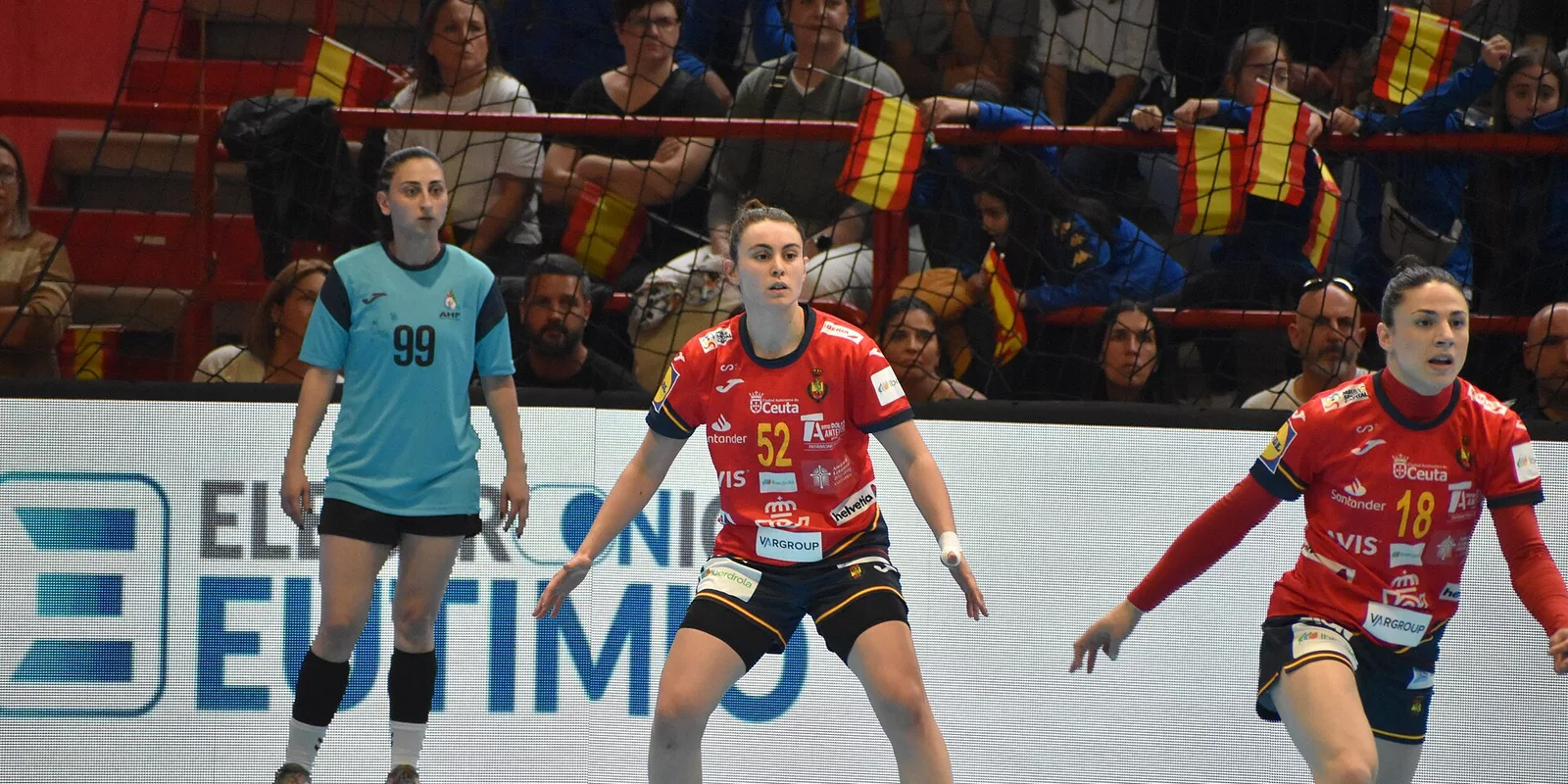
The 14th place at the 2025 World Championship (se abre en otra pestaña), including a defeat to the Faroe Islands, means this Euro has to be approached without nostalgia. Spain can no longer compete on the strength of the "Guerreras" name. They have to do it with their game.
The good news is that there are signs. The bad news is that they have come in friendlies, and that the treatment room has once again changed the plan.
Spain's schedule at the 2026 Women's Euro
The tournament runs from 3 to 20 December in Poland, Romania, the Czech Republic, Slovakia and Turkey. Spain are in Group C, in Antalya, according to the official EHF schedule (se abre en otra pestaña).
| Date | Match | Spanish mainland time |
|---|---|---|
| Thursday 3 December | Denmark - Spain | 19:00 |
| Saturday 5 December | Spain - Greece | 16:30 |
| Monday 7 December | Turkey - Spain | 16:30 |
The top two go through. The third goes home.
Whoever gets out of the group will travel to Cluj-Napoca for the main round, which starts on 10 December. Two survivors from Group A (Hungary, Montenegro, Slovenia, Iceland) and two from Group B (Norway, Romania, Switzerland, North Macedonia) await there, according to the draw (se abre en otra pestaña). The semi-finals (18th) and the final (20th) will be in Katowice.
There is an extra prize: the champion earns a direct ticket to Los Angeles 2028.
Squad: absences that hit the defence
Joaquín Rocamora called up 20 players for the Puertollano International Tournament. In the initial list (se abre en otra pestaña), Alicia Fernández returned after an injury and Paula Arcos was left out on medical advice.
The second blow came on 17 November. Anne Erauskin and Maitane Etxeberria dropped out through injury (se abre en otra pestaña). Paula Agulló and Erika Vladu came in, plus Estitxu Rodríguez as an extra player, making 21 in all.
The important detail is in the head coach's explanation. Etxeberria, a winger, brought physical presence defending at the 2 spot, and Rodríguez, a back, arrives to try out in that role.
Translated to the court: it is not just a winger being replaced. The 1-2 pairing on one side is affected, that is, the switches of opponent, the help on the 3, the response to the back-winger crossing and the first run into the fast break. These are automatisms that cannot be built in two weeks.
Besides, who defends at the 2 determines who runs first on the fast break and from where.
What the friendlies say (and what they don't)
Spain have won three of the four friendlies played against Germany and Japan between September and October.
- Spain 29-31 Germany and Spain 35-30 Germany (se abre en otra pestaña), in September in Granollers.
- Spain 34-23 Japan (se abre en otra pestaña), on 22 October.
- Spain 30-26 Japan (se abre en otra pestaña), on 24 October.
The average is 32 goals scored and 27.5 conceded. Beating Germany, world runners-up, has value. Conceding 31 and 30 in that same series also says something.
And there is one figure worth watching. Danila So Delgado scored 8 goals in the first match against Japan and 13 in the second: 21 of Spain's 64 goals in the series, one in every three. In the second match, 43%.
Having a back capable of that is an enormous advantage. Depending on her is something else. Denmark will not let her shoot comfortably: the question is what Spain do when she is met at nine metres and her arm is shut down. That is where the centre back, the pivot in the space left by the defender stepping out, and the weak side have to show up.
The second match against Japan left another clue: it was 11-11 at half-time and the defence suffered more against the Japanese systems. These are tests, with rotations and experiments. They serve to detect problems, not to forecast medals.
The science: where the matches at a Euro are won
Before talking about glory, it is worth looking at the numbers.
A study published in Scientific Reports in 2025 (se abre en otra pestaña) analysed 44 matches from the 2022 Women's Euro. The differences between winning and losing were clear:
| Indicator | Winning teams | Losing teams |
|---|---|---|
| Positional attack efficiency | 51.95% | 41.57% |
| Goalkeeper efficiency | 33.70% | 24.75% |
| Fast breaks per match | 4.34 | 2.80 |
In the model that explains goal difference, positional attack efficiency was the variable with the most weight, ahead of goalkeeping and fast-break efficiency. Together they explained 74% of the variation in goal difference.
Be careful with the reading: it is a single tournament and these are associations, not a recipe. Scoring more goals than you concede wins matches, of course. What is useful is seeing how much separates the two groups: about 10 points of efficiency in set attack and 9 in goalkeeping.
A second study, from March 2026, reviewed the Euros from 2016 to 2024 (se abre en otra pestaña) with teams that played more than six matches. In the women's category:
- Positional attack accounted in 2024 for 88.7% of the attacking goals analysed (excluding seven-metre throws).
- Positional goals rose from 20.9 to 23.8 per match.
- Fast-break goals fell from 3.62 to 3.15.
- Penetrations went from 2.95 to 4.88, a striking rise although not statistically significant.
The conclusion for Spain is uncomfortable and useful. Running adds up, but a team that wants to go far needs to solve 6 against 6. Against set defences, speed is not enough: you need to fix defenders, win the one-on-one and release the ball on time.
Rocamora seems to have it on his radar. In October he named set-piece situations (se abre en otra pestaña) as the priority work: free throws, power plays, short-handed situations and 7 against 6. Exactly where tight finishes are decided.
The three Group C rivals
Denmark: the yardstick
European runners-up in 2024 and fifth at the 2025 World Championship (se abre en otra pestaña). They are the group favourites and they come on day one.
The realistic goal is not just the result. It is to come out of the match with the defence tight, without turnovers that hand out fast breaks and with the rotations shared out. With three matches in five days, how you manage the first one affects the other two.
Greece: the warning has already been given
In April, in qualifying, Spain won in Kozani 22-24 (se abre en otra pestaña). It was 12-12 at half-time, after the Guerreras had led by four.
Spain got stuck in attack, missed shots and let Greece level through seven-metre throws and power plays. Evgenia Samolada scored 10 goals and the Greeks pushed until the end, even with an empty net.
Anyone who takes this match for granted did not watch that script.
Turkey: the home-court factor
They play at home and close the group. If the maths are still open on Monday 7, Spain will have to deal with atmosphere, pressure and fatigue. Ideally, they won't need that match to survive.
Five things to watch in front of the TV
- The 2 side. Who fills Etxeberria's gap and how much help she needs.
- The goalkeeping. Maddi Aalla, Nicole Morales and Lucía Prades were the trio called up for Puertollano. Getting close to a 33% save rate changes the tournament.
- The sharing of the shooting. If Danila So collects every decisive ball, that is a bad sign.
- The defensive balance. Against Denmark, every bad shot can be a goal against.
- The ends of possessions. Free throws, passive play and short-handed spells: that is where the work on the tactics board shows.
Before that comes the last exam. From 27 to 29 November, Puertollano hosts the matches against Portugal (Friday, 20:30), Argentina (Saturday, 16:15) and Tunisia (Sunday, 13:30) (se abre en otra pestaña). Then the final list for Turkey will come out.
Let's demand good play, not miracles
Rocamora is working with a long horizon, the so-called Proyecto 2029 (se abre en otra pestaña), and he himself has acknowledged that the team's identity is only beginning to appear. Asking for medals today would be selling smoke.
But "project" cannot be a word that justifies everything. This is my yardstick: getting through the group is mandatory; doing it by beating Greece and Turkey with authority, desirable; competing for 60 minutes against Denmark, the sign that there is a team.
In the main round, with names like Norway or Hungary in the possible draw, what will need to be measured is efficiency in set attack, goalkeeping and whether the group holds up when its first option fails.
If you coach, use the tournament. Pick a match, note each team's positional attacks, goals and saves, and compare them with the figures above. Your players will learn more that way than from watching a goals highlights reel.
And if you are going to imitate their changes of direction at your next training session, first check what you have on your feet: in our handball shoes section you can compare models according to your position.
