
A study published this year, 2026, on the Partille Cup, the largest youth handball tournament in the world, has once again put numbers on a question that the footwear industry prefers not to answer: does the extreme grip that brands sell protect you or injure you? Biomechanics has been giving an uncomfortable answer for more than a decade, and the 2026 market for handball shoes keeps going in the opposite direction.
The figure that should worry any club
Let's start with the finding that justifies writing this now. The study by Lindman et al., published in 2026 in Scandinavian Journal of Medicine & Science in Sports, followed 17,034 players during the six days of the 2024 Partille Cup. Result: 1,072 injuries recorded, a prevalence of 6.3% (95% CI: 5.9-6.7%) and an incidence of 34.9 injuries per 1,000 hours of play. No significant differences between sexes.
What matters is not only the volume, it is the curve: the lowest incidence occurred on the first day (21.4 injuries/1,000 hours) and rose progressively as the tournament went on. Accumulated fatigue, more matches, more impacts, more changes of direction on the same foot. Nothing new under the sun of youth handball. But it is a reminder that the equipment you wear is not an aesthetic accessory: it is the only real interface between your joint and the parquet at every braking.

Grip is not free: what biomechanics measured
Here is the underlying problem, and it is not new even though marketing acts as if it didn't exist. Wannop, Worobets and Stefanyshyn published in 2010 in the American Journal of Sports Medicine a study that should be compulsory reading for anyone designing a handball outsole. They tested shoes with different outsole architecture —high traction versus smooth sole— on a robotic machine and then with 13 athletes performing V-cut changes of direction.
"The greater the rotational traction, the greater the joint moments at the ankle and knee outside the sagittal plane. The more the sole 'bites' the floor when pivoting, the more torque your knee absorbs in the axis it tolerates worst: rotation."
Translated: the more the sole "bites" the floor when pivoting, the more torque your knee and ankle absorb in the axis they tolerate worst: rotation. The foot stays nailed down; the tibia and femur keep rotating. That is, literally, the mechanism of a non-contact ACL tear.
It is not an isolated laboratory hypothesis. It is the same mechanism that was already documented specifically in handball more than twenty years ago, with real competition data.
The precedent handball already lived through (and seems to have forgotten)
Olsen et al. published in 2003, also in Scandinavian Journal of Medicine & Science in Sports, an analysis of seven seasons of the three top Norwegian handball divisions (1989-2000). They recorded 174 ACL injuries, of which 53 occurred in regular-season league matches with enough data to compare the type of surface.
The result, broken down by sex, is emphatic in the women's category: 8 injuries on wooden courts versus 36 on artificial courts, a risk 2.35 times higher on artificial surface. In men there was no significant difference. The authors' hypothesis: artificial courts generate more friction, and that friction between outsole and surface is what fixes the foot to the floor just when the rest of the body is still moving.
The recommendation of that study, twenty-one years later, still hasn't sunk into the commercial design of shoes: seek a balance between enough traction to perform and limited traction so as not to compromise joint safety. In practice, the industry has opted to sell the former as a selling point and keep quiet about the latter.
What is sold in 2026 (and what the spec sheet doesn't say)
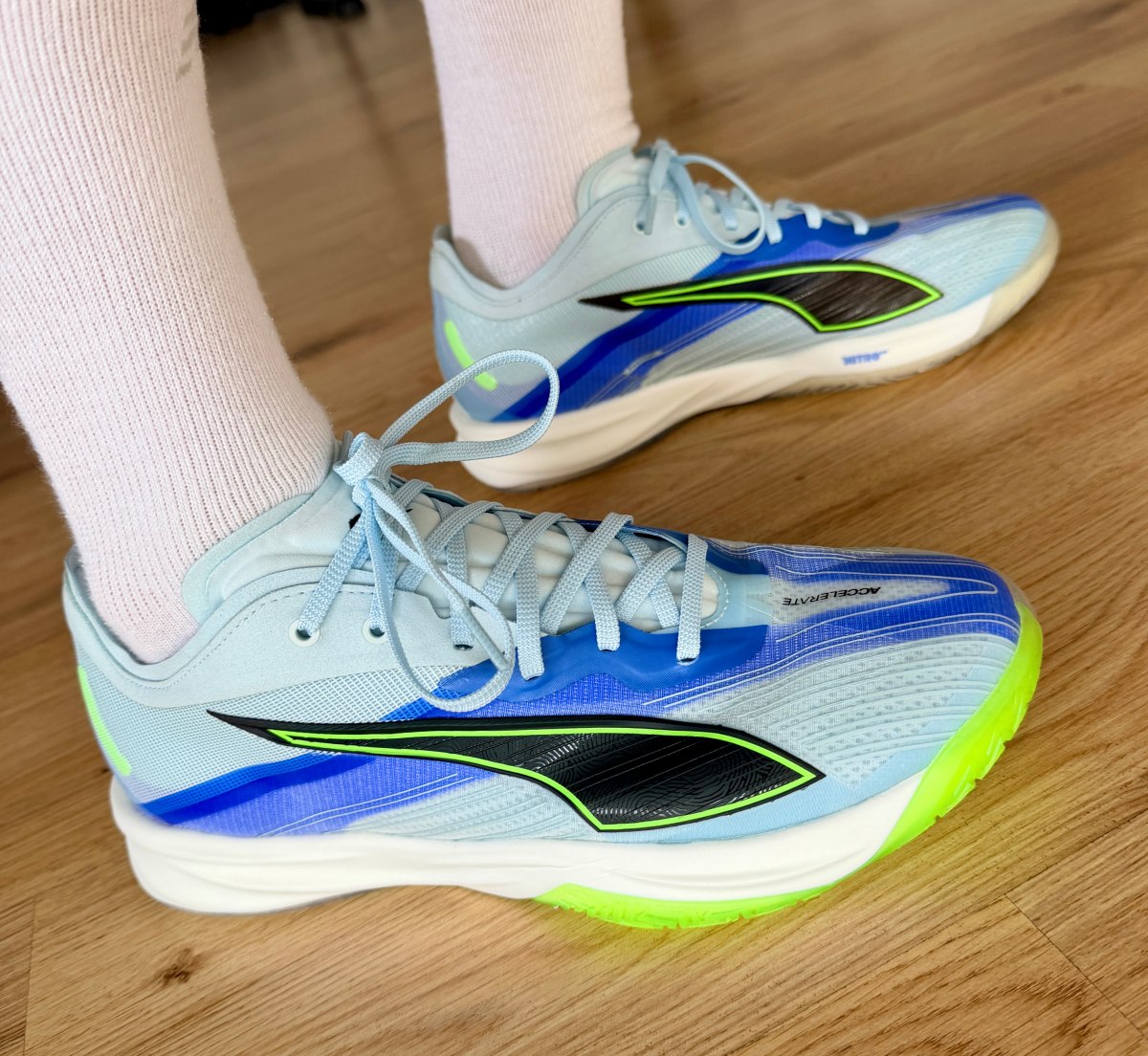
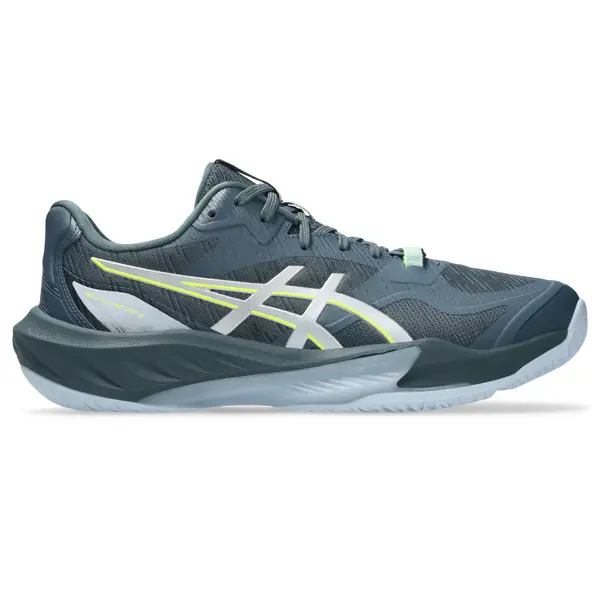
Reviewing the current catalogue of high-end handball shoes , the pattern repeats on almost every spec sheet: "new traction pattern for greater speed and reaction agility", "chassis that locks the foot in sharp changes of direction", "superior grip for pivots". It is the dominant sales language, and it is no coincidence: grip is perceived as a synonym for performance, and performance sells more than prevention.
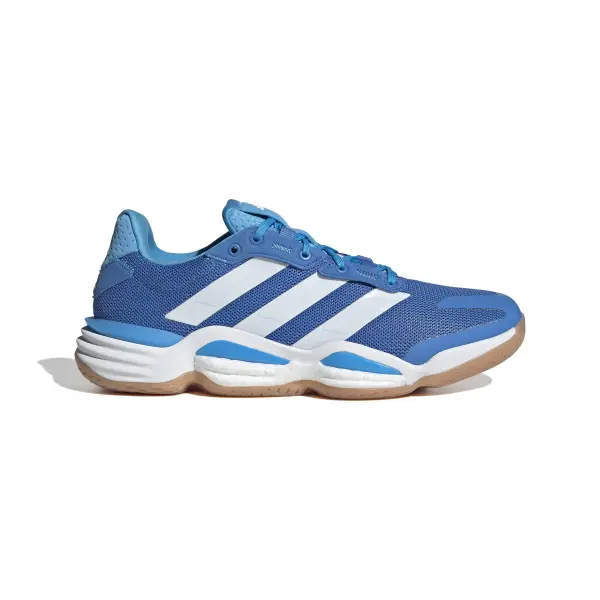
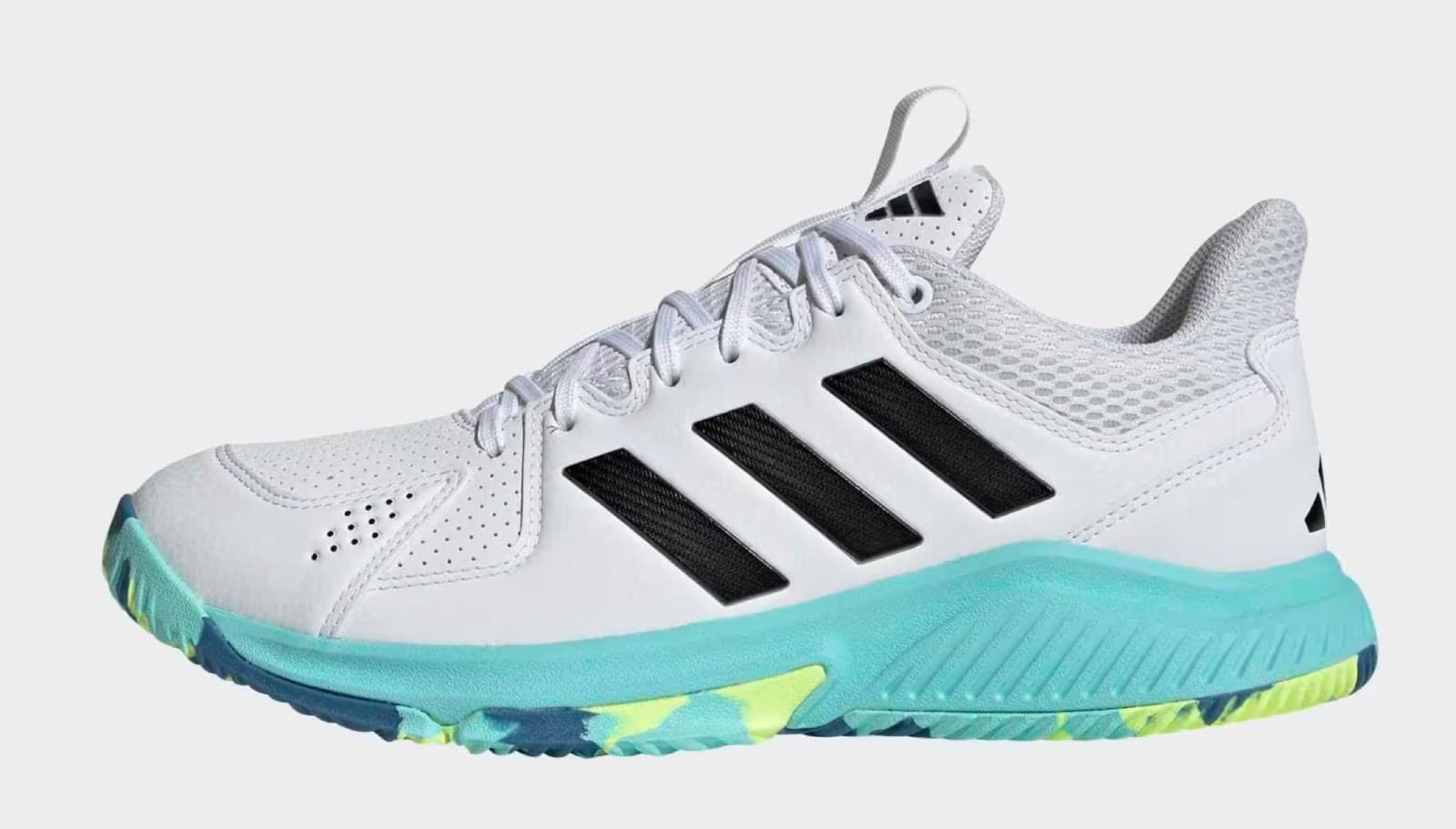
The Adidas Stabil 16, the benchmark for pivots in this season's rankings, combines a BOOST midsole for energy return with a structural chassis designed precisely to "lock" the foot in cuts. It is solid technology and the brand has spent sixteen generations polishing it, but it is exactly the type of design that Wannop's literature identifies as generating greater joint moment in the rotational axis when traction is maximised without a counterweight.