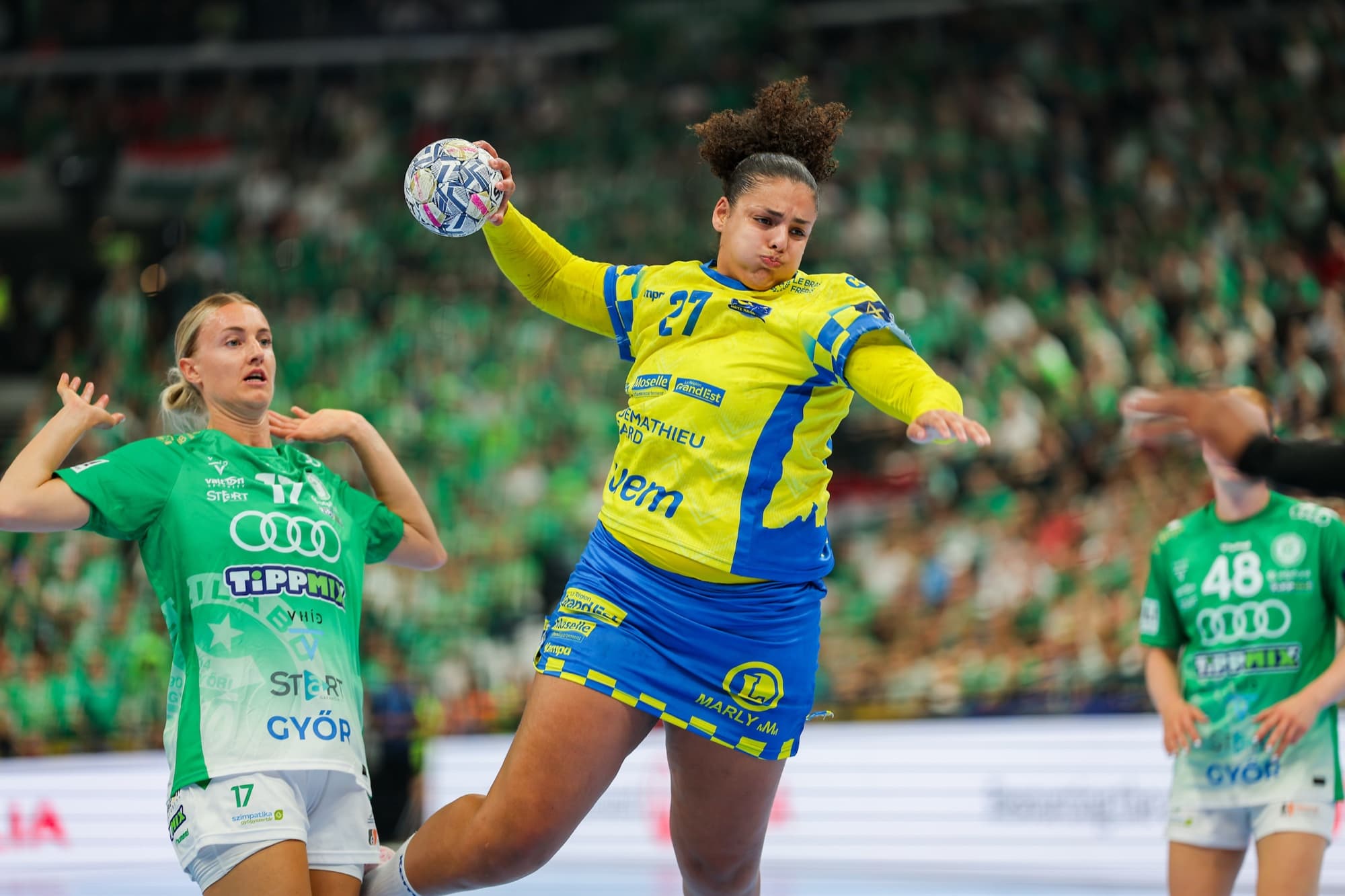

The 2026 EHF Champions League Women Final Four leaves an uncomfortable image for Spanish handball. There was no Spanish team in Budapest. Nor was there any significant presence of Spanish players in the squads fighting for the title.
The fact is no minor one. The final stage was contested by Metz Handball, Györi Audi ETO KC, CSM Bucuresti and Brest Bretagne Handball. The official EHF ranking places Metz as champion, Györ as runner-up, CSM Bucuresti third and Brest fourth. The last eight also included FTC-Rail Cargo Hungaria, Gloria Bistrita, Odense Håndbold and Team Esbjerg. No Spanish club appeared in that picture of European elite. (Source: EHF Champions League (se abre en otra pestaña))
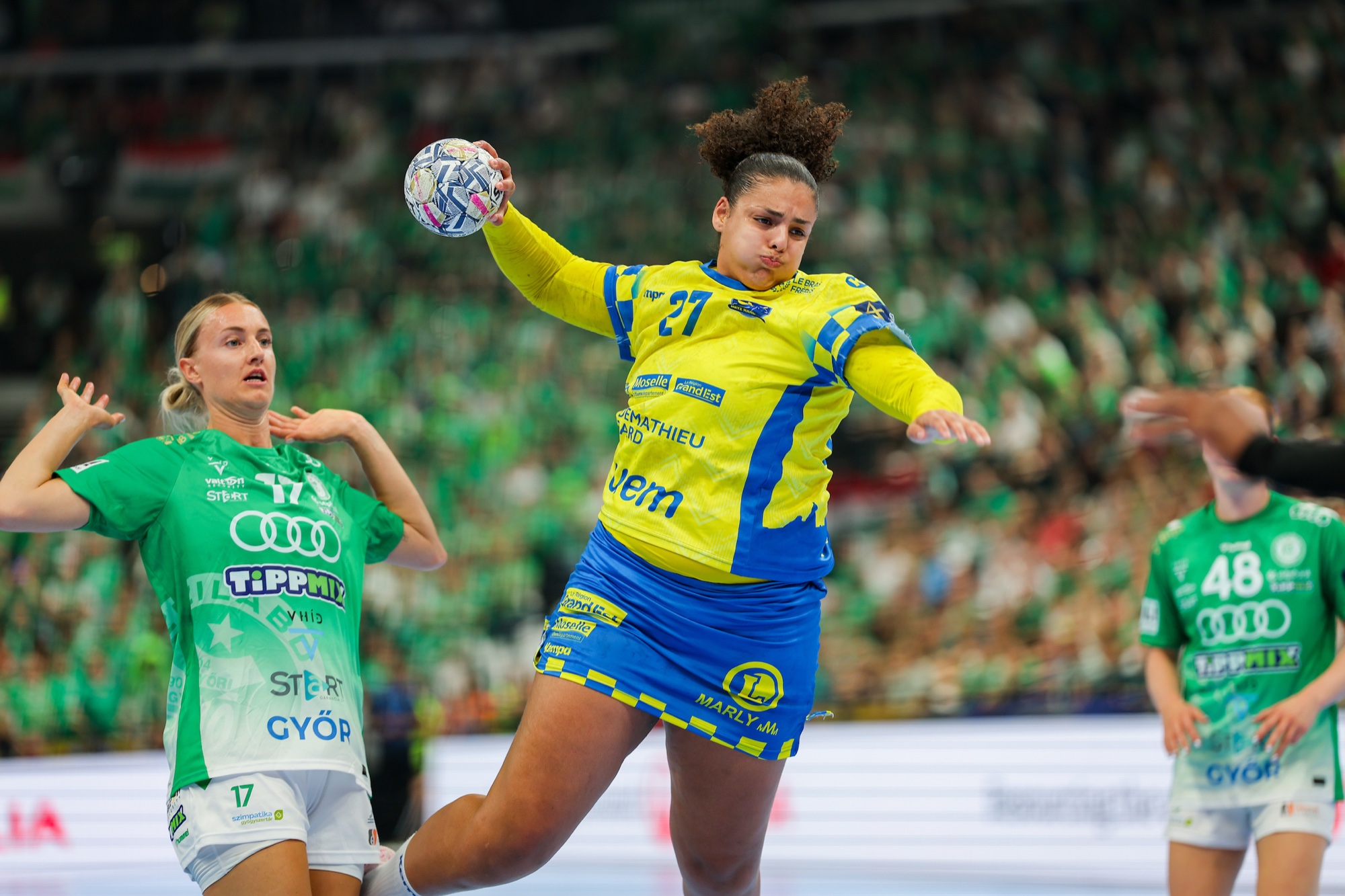
The sporting reading is clear. France has banged its fist on the table. Metz won the Champions League and became the first French club to lift the women's title. It also did so with Sarah Bouktit as MVP of the Final Four, after scoring 12 goals in the final and 20 over the whole weekend. (Source: EHF Champions League (se abre en otra pestaña))
Final summary: Metz 31-29 Györ
But the reading for Spain is even more uncomfortable. While France puts two clubs in the Final Four and a large majority of players in the decisive tournament, while Denmark keeps exporting talent to top-level teams, Spanish women's handball once again watches from the outside.
We are not talking about a bad season. We are talking about a symptom.
A Final Four dominated by France
The 2026 Final Four was, above all, a demonstration of the current weight of French handball. Metz and Brest reached the last weekend of the competition. That already explains part of the dominance in the number of players, but not all of it. French influence was also visible in non-French teams, such as Györ, where names of enormous competitive weight like Estelle Nze Minko or Hatadou Sako appear.
Metz won with a very recognisable French core. Sarah Bouktit, Chloé Valentini, Grâce Zaadi, Léna Grandveau or Laura Flippes are part of a generation that doesn't just compete well with the national team. It also sustains clubs able to win the Champions League. The difference is important. France does not live solely off the talent of its players. It has managed to give that talent strong clubs, a competitive context and weekly exposure to the highest level.
Brest reinforces that idea. Its squad also has a very French structure, accompanied by top-level foreign players. That balance is one of the keys of the model: important domestic players, difference-making signings and a league able to generate ambitious European projects.
France did not get here by chance. It has built an ecosystem. It has clubs that compete, an attractive league, investment, media presence, professional structure and a base of players who don't need to leave too early to measure themselves against the best.
That is the mirror that should worry Spain most.
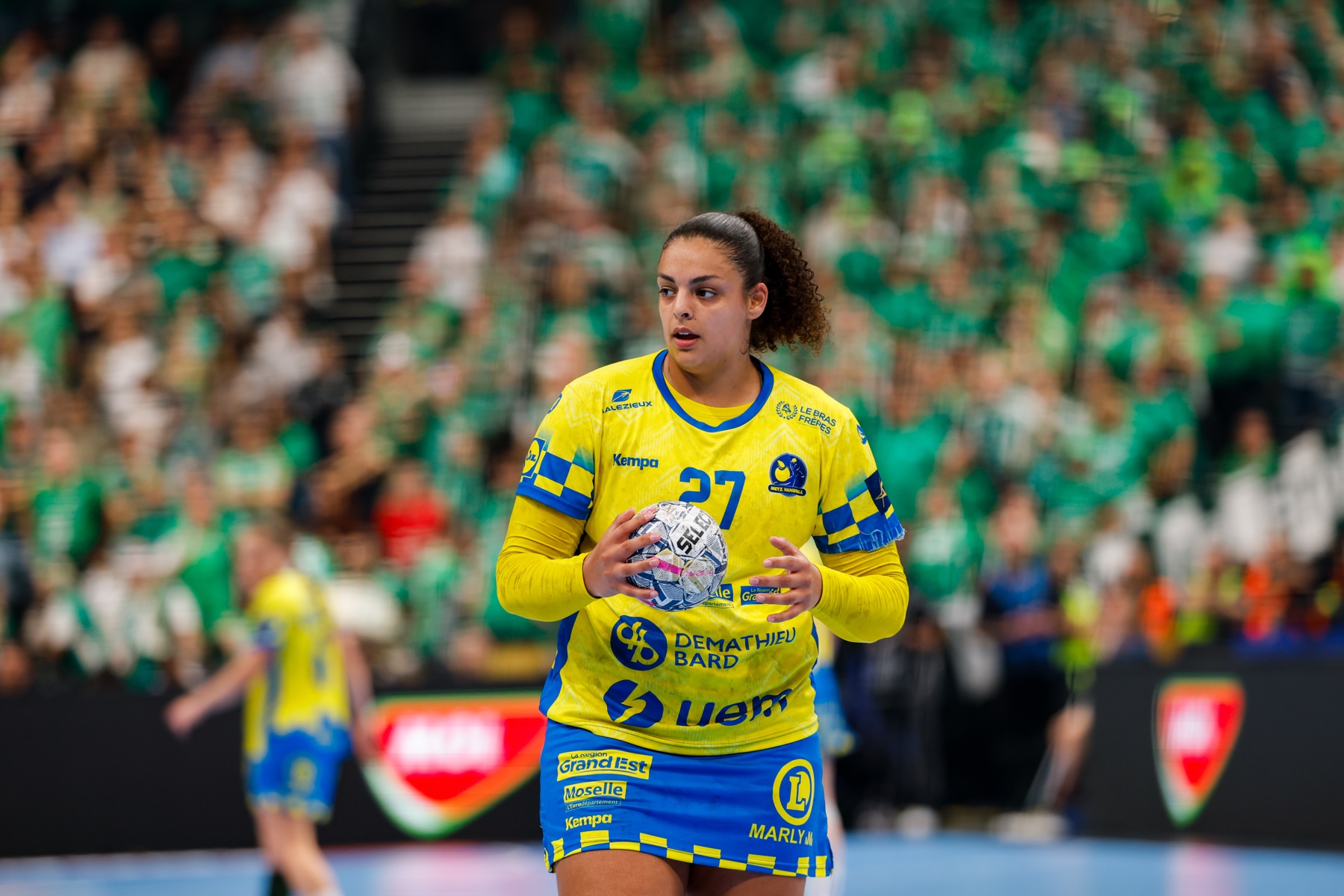
Denmark didn't win the Champions League, but was inside again
The second country that appears strongly in the analysis of nationalities is Denmark. It had no club in the 2026 Final Four, but its players were present in top-level squads. Györ is the clearest example, with Danish profiles such as Sandra Toft or Kristina Jørgensen, within a squad that brings together Hungarian, French, Nordic, Brazilian and Dutch talent. (Source: EHF Champions League (se abre en otra pestaña))
That nuance matters for Spain. You don't always need a club in the Final Four to be in the Final Four. You can also be there through your players. You can export talent. You can have internationals competing every week in the best teams in Europe. You can make your national team benefit from that competitive friction.
Denmark manages it. Norway too. Sweden, the Netherlands and France have been doing it for years. Spain, by contrast, appears less and less in that conversation.
And there lies one of the big problems.
Approximate count by nationality at the 2026 Final Four
This analysis should be read as an approximate snapshot based on the public squads of the four finalist clubs. It is not a closed list from match reports, but it does show a very clear trend: France was the dominant nationality and Denmark came next as one of the big talent-exporting countries.
| Nationality | Presence | Sporting reading |
|---|---|---|
| France | Very high | Two French clubs and key players also in foreign teams |
| Denmark | High | No club in the semi-finals, but with important players in top squads |
| Hungary | High | Györ keeps a national base within a powerful international structure |
| Romania | Medium-high | CSM Bucuresti combines local talent with high-level foreign signings |
| Norway | Medium | Still places players in the most demanding clubs |
| Sweden | Medium | Significant presence in competitive European squads |
| Netherlands | Medium | Highly valued players at top-level clubs |
| Brazil | Medium-low | Lower volume, but with difference-making profiles in key positions |
| Spain | Very low | Worrying absence from decisive clubs and squads |
The conclusion needs little embellishment. Spain is not today at the centre of the Women's Champions League.
The contrast with Spain: a good base, little presence at the elite
The most paradoxical thing is that Spain still trains players well. There are handball youth academies with very strong structures. Navarre, the Valencian Community, Castilla y León, the Basque Country, Galicia, the Canary Islands, Andalusia, Catalonia and Madrid maintain talent, well-prepared coaches, competitive regional teams and clubs that genuinely work.
The problem comes afterwards.
The leap between the base and the European elite has become too big. A Spanish player can be well trained, compete well in the youth categories and reach the Liga Guerreras Iberdrola with good fundamentals. But if the senior environment doesn't offer her European tempo, professionalisation, physical demands, top-quality training, financial continuity and high-level international matches, her progression is limited.
That is the bottleneck.
Spain produces intelligent, tactically rich, competitive players with a good reading of the game. But current European handball also demands enormous physical preparation, long-range shooting, high-quality rotations, defensive specialists, decisive goalkeepers, sustained speed and weekly experience against the best.
There, Spain is losing ground.
The Champions League demands more than pride
It would be unfair to say everything comes down to budget. It would also be naive to deny that money weighs enormously.
The current Women's Champions League demands real professionalisation. Having a good generation or competing out of pride is not enough. You need a deep squad, quality rotations, specific physical preparation, recovery, video analysis, a medical structure, well-managed travel and contracts that allow you to retain talent.
When you face Metz, Brest, Györ or CSM Bucuresti, the difference doesn't show up only in a star player. It shows in the depth of the bench, in the sustained tempo over sixty minutes, in the ability to defend with contact and get back running, and in the possibility of changing pieces without the team dropping several steps.
French clubs have understood that path. Hungarian ones have been working at it for years. Romanian ones, with their ups and downs, have bet heavily on international squads. The Danes have built a league that produces exportable players. Norway, Sweden and the Netherlands keep feeding the market.
Spain often competes from tradition, youth academies, tactical intelligence and the capacity to survive. It is admirable. But it is not always enough to dominate.
The question is uncomfortable: do we want our women's clubs to compete in Europe or do we only want them to hold out?
Because those are two different projects.
The absence of Spanish clubs also affects the Guerreras
The problem doesn't end with the clubs. It reaches the national team.
A French player who competes every week at Metz or Brest grows up in an environment of maximum demand. A Dane who plays at Györ lives alongside top-class internationals. A Norwegian, a Swede or a Dutchwoman who enters that ecosystem learns to decide in big matches, to train at another pace and to live with pressure.
The Spanish national team needs more players exposed to that context. It is not enough to reach a European Championship, a World Championship or an Olympics and compete well for two weeks. Elite is built during the season. At the club. In training. In rotations. On trips. In hard defeats. In those matches where a turnover in the 55th minute costs a European semi-final.
If Spain has no clubs in the Champions League and also doesn't place many players in the teams that decide the Champions League, the competitive margin of the Guerreras narrows. The national team can remain competitive through culture, craft and character, but it will find it harder to hold its own against countries whose players experience maximum demand all year round.
The risk: training well, but not reaching the last step
Spain runs the risk of becoming a country that trains interesting players, but not enough players for the highest market. That nuance is dangerous.
We are not talking about lacking talent. The talent is there. We are talking about whether that talent arrives prepared to compete at Metz, Györ, Brest, CSM, Esbjerg, Odense, Ikast, FTC, Bietigheim or Buducnost. We are talking about whether our best players have the physique, the tempo, the shooting, the experience and the mentality to enter squads where every training session feels like an international match.
That is where the gap appears.
Spanish handball has always had a very recognisable identity: good reading, defence, goalkeeping, character, collective play and tactical ability. But women's handball today has become more physical, faster and deeper. The player who could once survive on intelligence now needs to withstand harder contact, run more times, shoot from further out, defend more space and make decisions under greater pressure.
It is not a criticism of the Spanish player. It is a criticism of the context we are offering her.
Why France has made the leap
France has done something Spain has not managed to sustain: connecting training, league, strong clubs and national team.
Metz is the clearest case. The club doesn't win the Champions League with a squad made up only of foreign players. It wins with important French players. Sarah Bouktit is the symbol, but not the only one. Around her there is a structure that allows the domestic player to be not an add-on but part of the competitive core.
Brest offers another version of the same path. It has a strong French base and, at the same time, the ability to attract international talent. That mix raises the internal level of the league, improves training and creates a virtuous circle. French players stay because they have competitive projects. Foreign players come because those projects are attractive. The national team benefits because its players grow up in environments of maximum demand.
Spain is not so far away in knowledge. It is far away in structure.
And that difference, year after year, is more noticeable.
The market also speaks: where the best play
The list of clubs registered in the 2025-2026 Champions League also helps to understand the map. The EHF announced 19 clubs registered for the competition and, among the teams with a guaranteed place or upgrade requests, there were Denmark, France, Germany, Hungary, Montenegro, Norway, Romania, Slovenia and Croatia. No Spanish club appeared in that initial list for the top competition. (Source: EHF Champions League (se abre en otra pestaña))
To get a clearer idea of who drives European women's handball, the EHF club ranking (se abre en otra pestaña) offers the most objective data: the countries that dominate the competition accumulate better coefficients, more places and preferential access conditions for their clubs. Spain, without representation in the top competition, also loses positions in that ranking.
The final picture of the competition confirmed that trend. The EHF's own clubs page shows the final path: Metz, Györ, CSM and Brest in the Final Four; FTC, Gloria Bistrita, Odense and Team Esbjerg in the quarter-finals; Borussia Dortmund, DVSC, Podravka and Ikast in the play-offs; Krim, Buducnost, Sola and Storhamar in the group stage. Spain was on none of those steps. (Source: EHF Champions League (se abre en otra pestaña))
That fact is devastating because it speaks of a country, not just a club. It's not that a Spanish team went out early. It's that Spanish women's handball had no presence in the competition that marks the elite.
The Liga Guerreras Iberdrola needs a European locomotive
The Liga Guerreras Iberdrola has clubs with identity and hard work. Super Amara Bera Bera has been the great competitive benchmark for years and has high-value players such as Lyndie Tchaptchet. Costa del Sol Málaga has grown a lot. Elche, Guardés, Granollers, Porriño or Elda Prestigio represent projects with history, youth academies or roots. There are also individual names that explain the national level: the experience of Silvia Navarro at Rocasa or the potential of Naroa Baquedano at Aula Valladolid.
But the Champions League demands another scale.
The question is not whether these clubs work well. Many work very well. The question is whether the Spanish ecosystem allows them to build squads able to compete against the best European projects. Right now, the answer is harsh: not in a stable way.
Spain needs one or two locomotives. Clubs that not only win at home, but can sustain a European project over several years. Teams that accumulate experience, improve their ranking, attract players, retain domestic talent and let young Spanish players see the Champions League as a possible path without always having to leave.
Without that locomotive, each generation will depend too much on one good crop, one particular coach or one exceptional season.
What would need to change
The first step is the transition from junior to senior. Many players get lost in that stretch. Not always for lack of talent. Sometimes for lack of real minutes, absence of decent contracts, academic or work difficulties, lack of physical monitoring or a calendar that doesn't help growth in a progressive way.
The second step is raising the competitive tempo of the league. The Liga Guerreras needs more high-demand matches, better conditions, more visibility and a stronger commercial narrative. It is not just about playing. It is about building a recognisable sporting product.
The third step is professionalising structures. Physical preparation, video analysis, recovery, communication, sponsorship, youth academy, individual monitoring and career plans. All of that is no longer a luxury. It is the minimum to compete in Europe.
The fourth step is exporting better. If a Spanish player has the level to leave, she must do so with a strategy. The women's handball transfer movements that we follow at Liftados show that not just any destination will do. She should go to clubs where she can train better, compete more and take on a role that lets her grow. Leaving for the sake of leaving doesn't always improve a player.
The fifth step is retaining talent. That takes money, but also a project. A player can stay if she feels her club competes, improves, looks after her and offers her a path. Retention doesn't depend only on salary, although salary is an essential part.
The 2026 Final Four as a warning
The 2026 Final Four should not be read as an anecdote. It is a warning.
France dominates with clubs and players. Denmark keeps placing talent in top-level projects. Hungary maintains powerful structures. Romania invests in international squads. Norway, Sweden and the Netherlands continue feeding the European market. Spain, meanwhile, appears outside the frame.
The problem is not that France has many players in the Final Four. That speaks well of France. The problem is that Spain has almost no presence at the table where Europe is decided.
And that forces decisions.
Spanish women's handball can keep living off its good base, its honest clubs and a league that competes with dignity. Or it can build a more ambitious plan to return to the Champions League for real.
There is no need to copy France, Hungary or Denmark. Spain has its own identity. But training well is no longer enough. Talent needs structure, league, investment, visibility and European minutes.
The 2026 Women's Champions League has left a very clear image. The centre of European handball is far from Spain. The good news is that the base exists. The bad news is that the path to the elite has narrowed too much.
And if it isn't widened soon, the problem will no longer be being outside a Final Four. The problem will be our best players growing up further and further from the level where the future of European handball is decided.
