

I have been coaching in summer for years. Not because there is no alternative, but because summer has something the rest of the season can never give you: time. Real time, with no match on Saturday shaping everything you do on Tuesday. Time to teach, to correct, to repeat. That time is the raw material of handball camps, and that is why every July and August the sports halls of half of Spain smell of resin, sweat and possibility.
Summer is the best time to learn handball
During the season, youth coaches live in a permanent contradiction. We know what needs working on (passing technique, the first defensive step, the decision in 1v1), but the calendar rules. There is a match at the weekend, a tournament next week, and the one after that we have to prepare the team for the derby. Competitive logic pushes towards tactics, towards the result, towards what works right now. Technical training is left for when there is time, and that time usually never comes.
The camp breaks that logic. For five, six or seven days, there is no league table, no derby, no pressure to win. There are girls and boys with a ball in their hands, many hours on court, and a coach who can devote an entire session to correcting the support foot on reception without anyone watching the scoreboard. That, in terms of development, is worth much more than it seems.
I have seen players who in two weeks of camp progress more in specific aspects than in the whole previous season. Not because they are smarter or harder working in summer. It is that the context lets them absorb. There is no pressure for immediate performance. They can make mistakes, correct and repeat without the error costing them Sunday's match.
What a camp can do that the season cannot
There is a short but very specific list of things that camps work on better than any other structure. The first is individual technique. The seven-metre throw, the protective dribble, the change of hand, the jump-shot entry, the pivot's block. Techniques that during the season are taken as learned or are badly worked on, because there is always something more urgent. At camp you have hours to dismantle and rebuild a complete technical movement.
The second is coordination and specific physical work. In season, the fitness coach works against the clock and accumulated fatigue. In summer, with rested players and no matches conditioning the loads, you can do foundational work that then sustains the whole season: coordination, explosiveness, running technique, core, joint mobility. Things that cannot be improvised in October.
The third, and probably the most underrated, is developing a competitive character. At a camp, players from different clubs, different levels and different provinces live together. That generates a different kind of competitiveness from that of the team you have always played in. Kids demand more of themselves because they want to prove themselves in front of strangers. We coaches observe things that are not seen in the familiar environment of the club: how a player reacts when he loses, how he leads when his usual team is not there, how he communicates when nobody knows him.
Campus Uribe: when handball is the excuse
I have worked with the Campus Uribe in Bizkaia and what I take away most each time is not the court exercises. It is the corridor conversations, the dinners with players who did not know each other at all the week before and who by the fifth day are swapping numbers to keep talking handball in September.
Uribe has been running since 2009 and its secret is not technical. It is relational. A week at the Larramendi Ikastola in Mungia brings together boys and girls from different clubs, different provinces, different playing styles. A lad from Bilbao who only knows his own club's handball suddenly finds himself sharing a dressing room with someone from Vitoria or Pamplona who plays exactly the same position but does it differently. No training session gives you that. Living together does.
The values the camp conveys (respect for the opponent, generosity in play, the ability to adapt to unfamiliar teammates) are not written in any technical notebook. They are learned at dinner, in the afternoon match, on the way back to the accommodation after a long day. The court matters, of course. But at Campus Uribe the court is the pretext for other things to happen that last much longer than a week.
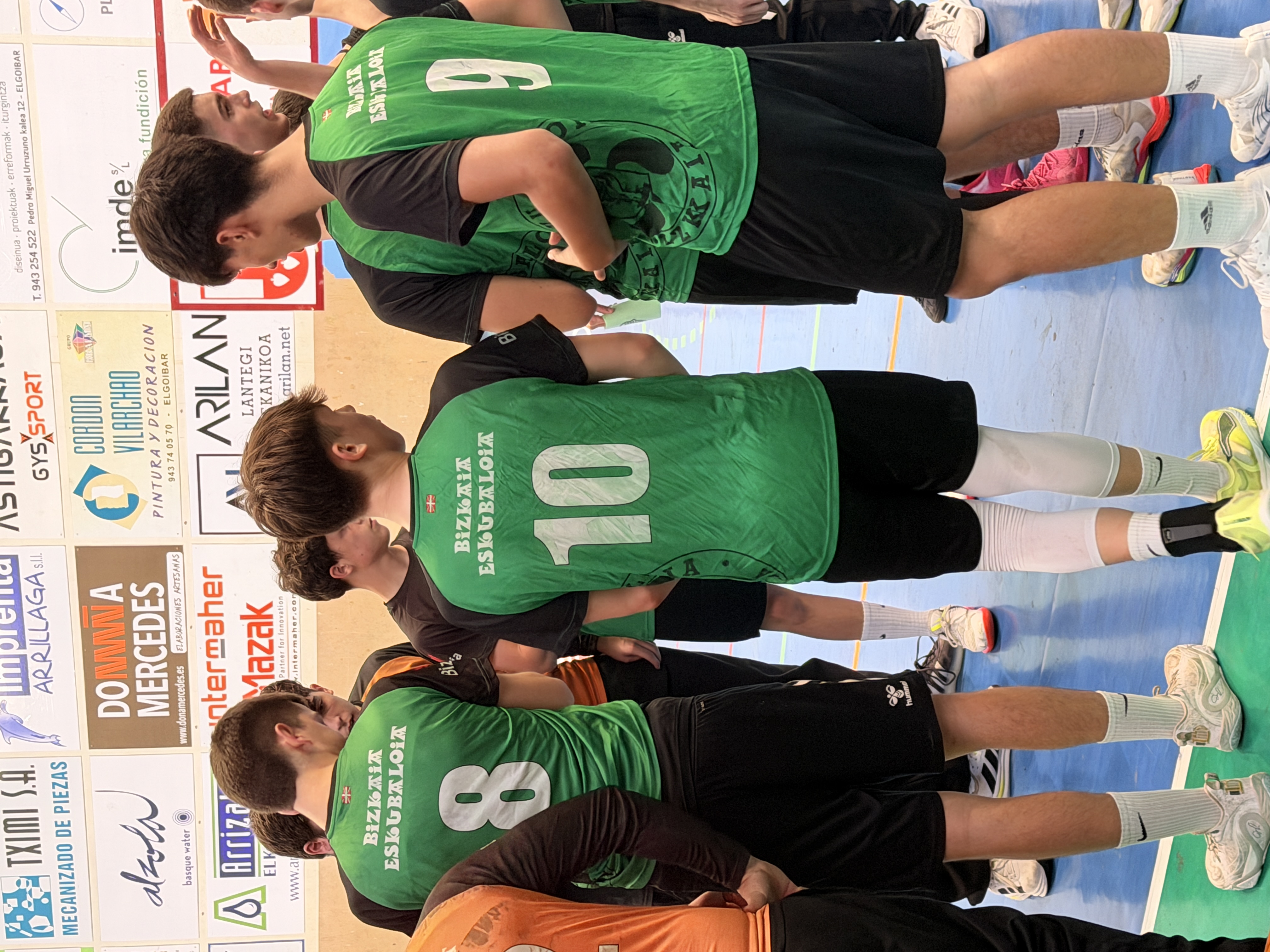 Bizkaia Eskubaloia players during a break. Conversations between teammates from different clubs are part of the learning.
The TARE and the Akademia: the Basque Federation bets on summer
The Basque Handball Federation has for years been betting on summer as a time for technical development, and it does so through two structures that have different but complementary objectives.
The TARE (Teknifikazio ARErako Egitaraua) is the technical development programme for the most advanced profiles in each category. It is not an open camp: it is a gathering of selected players where the Federation's coaches work with a small group, with a defined game model and very specific technical and tactical objectives. I have taken part in several editions and what sets the TARE apart from other camps is continuity: the players do not leave with loose exercises, they leave with an internalised system of play. That then shows in how they behave in their teams when the league starts.
The Akademia targets a different profile: it is broader, more open, and works as a gateway to the Basque technical development structure. If the TARE is the high-demand level, the Akademia is the place where talent is spotted, where work is done with larger numbers and where seeds are sown. Many players who later reach the TARE go through the Akademia first. The Basque Federation has understood something that other federations have not yet: that summer is not handball's free time, it is the time for investing in handball.
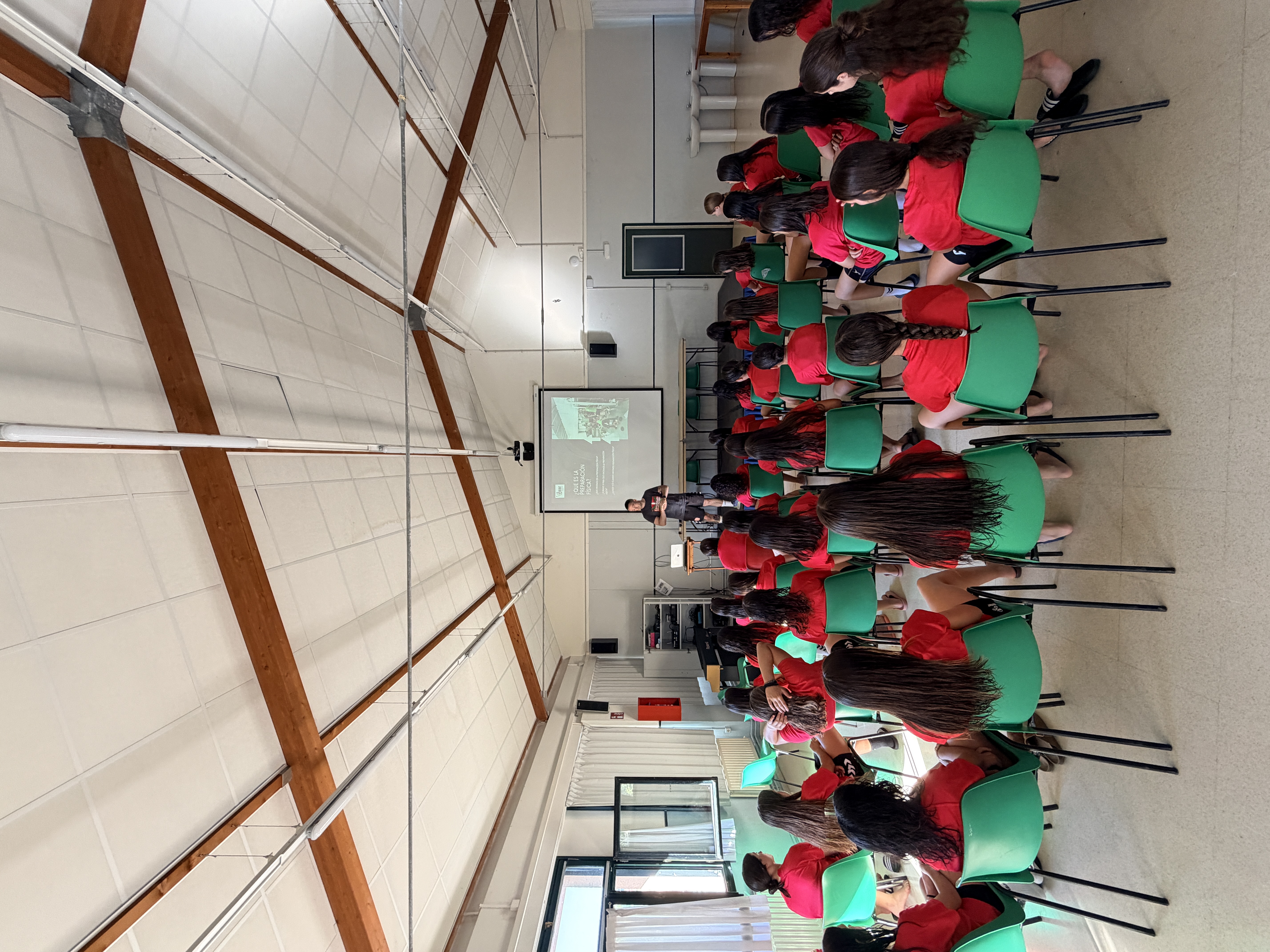 Theory session with video at a Basque Federation gathering. Tactical analysis complements the court work.
Featured camps — Summer 2027
How camps have become a real source of income
We have to be honest here, because this is talked about little and it is an important part of the equation. Handball camps have gone from being a vocational activity for four enthusiasts to a significant source of income for many profiles in the sector.
For players, especially those in the semi-professional category or División de Honor Plata, working as a monitor at a camp during the summer is a regular part of their economic model. They are not top-flight salaries, but they are supplementary income that allows them to keep up their dedication to handball during the months without competition. And there is something more: young players who work as monitors at camps learn to teach. To convey what they do intuitively. That makes them better players and prepares them for an eventual career as coaches.
For clubs, organising their own camp has become a complementary route of funding and, in some cases, a tool for recruiting players. A child who spends a week at a club's camp and enjoys it is far more likely to want to join that club in September. And the income the camp generates (registration fees, accommodation services, materials) can fund part of the club's equipment or activity during the season. At some small clubs, the summer camp generates a significant percentage of the annual budget.
For coaches, the camp represents something that amateur handball almost never offers: the chance to be paid for coaching. Most youth coaches in Spain coach on a voluntary basis or with token compensation. The camp is one of the few structures where technical work receives direct financial reward, even if only occasionally. That dignifies the profession and helps retain talent on the bench.
Friendships that outlast the camp
I have handball friends I met at a camp fifteen years ago. Court-mates for a week who became professional references, respected rivals, people I still talk handball with today. That is not anecdotal: it is structural.
Handball is a community sport. A week at camp creates bonds that are not built in a whole season at the same club. Living together, sharing a dressing room, training together morning and afternoon, eating at the same table and arguing about whether the 6:0 has a future or whether the pivot should block before moving... that creates a network of relationships that then becomes the backbone of the handball ecosystem in a region.
I have seen how under-14 players who met at the Akademia keep crossing paths in the División de Honor play-offs ten years later. There is an invisible thread connecting the summer camp with the adult handball network of the Basque Country. That thread is more important than it seems.
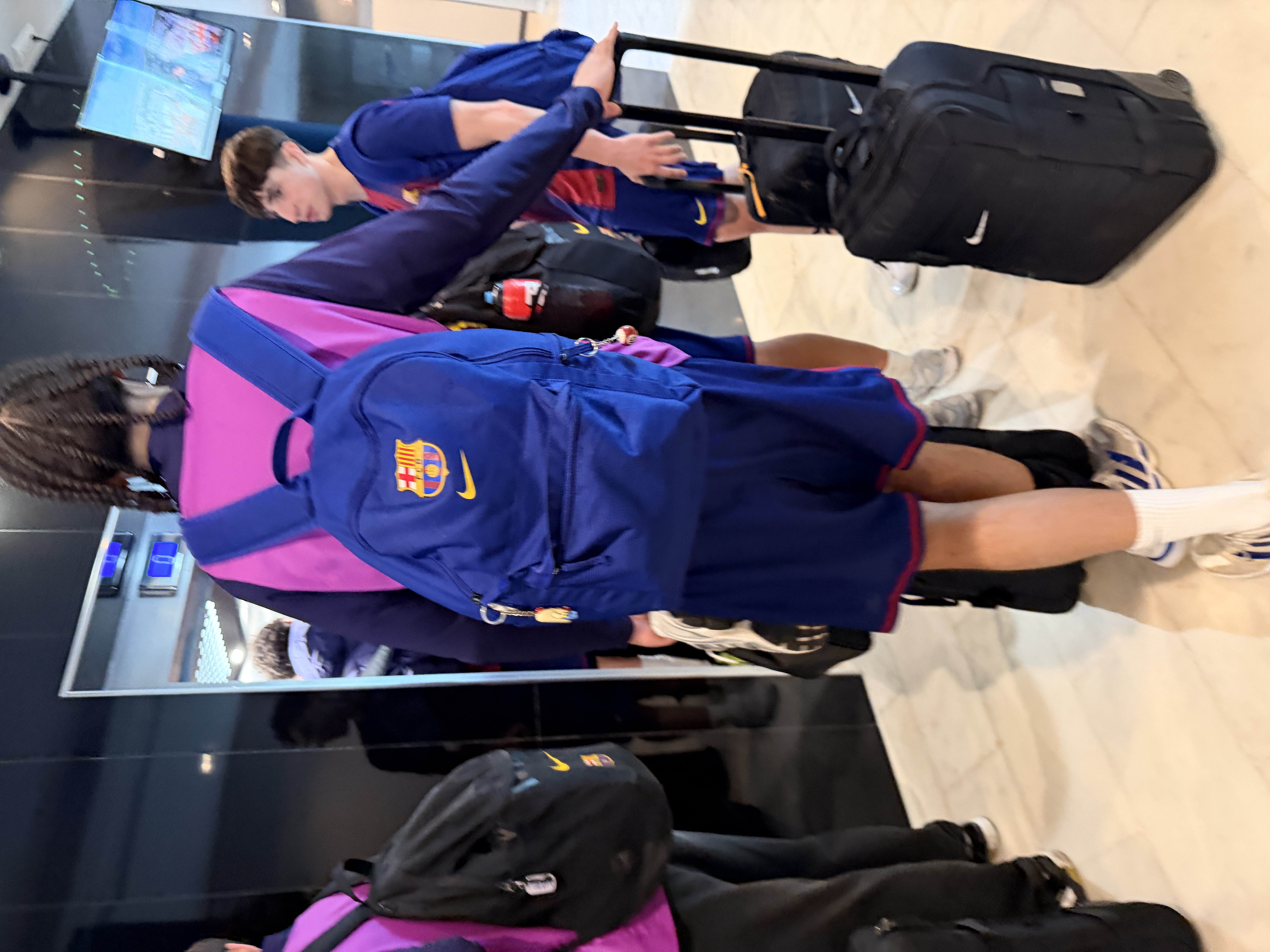 Arriving at camp: suitcases, kit and the expectation of a different week. That mix of nerves and eagerness is the starting point.
What a good camp needs to really work
Not all camps are the same. I have worked at many and have learned to tell apart those that leave a mark from those that are simply a week of ball. The difference is not in the budget or the facilities. It comes down to four specific things:
A clear technical model. A camp without a common thread (an idea of play running through all the sessions) is a sum of disconnected drills. Players have fun, but learn nothing that sticks. A good camp has a narrative: "this week we are going to improve the break out into the counter-attack" or "this week we work on 1v1 with an advanced defender from the start up to 6v6". Everything points to the same thing.
Coaches who know how to teach, not just play. A player being good does not mean he can convey what he does. The best camp monitors I have known are not necessarily the best players: they are the ones who know how to find the right words for each player and each situation. Knowing how to play is the minimum condition. Knowing how to teach is the differentiator.
Practice density. Players should spend as much time as possible with the ball in their hands. Long talks, videos without purpose and excessive breaks between tasks kill the camp's energy. In a session of an hour and a half, a player should have the ball in his hands for at least fifty minutes.
An environment that invites risk-taking. The camp has to be the place where you can fail without consequences. If a player feels that his mistake could cost him his place in the group or his reputation in front of his teammates, he will retreat to the safe option. And learning is always stepping out of the safe zone.
The camp is not the end of summer. It is the start of the season
The last thing I have learned after years at camps (as a player, as a monitor and as a technical coordinator) is that the camp has to be thought of as the start of something, not as the end of the rest. Players who arrive in September having been through a well-run camp arrive with their heads already in handball. They have already been through the week's technical challenge, they have already felt the resin on their hands again, they have already talked handball for a whole week with people who also live from it.
They arrive fired up. And a team that starts pre-season with fired-up players has an advantage that does not appear on any dashboard, but that shows in the quality of the first training session in August.
That is why, when someone asks me whether it is worth sending their son or daughter to a handball camp in summer, I always say the same thing: if the camp is well organised, it is worth more than anything else you could do in those weeks. Because the handball you learn in summer, calmly, without pressure, with plenty of time and new people around you, is the handball that lasts.
