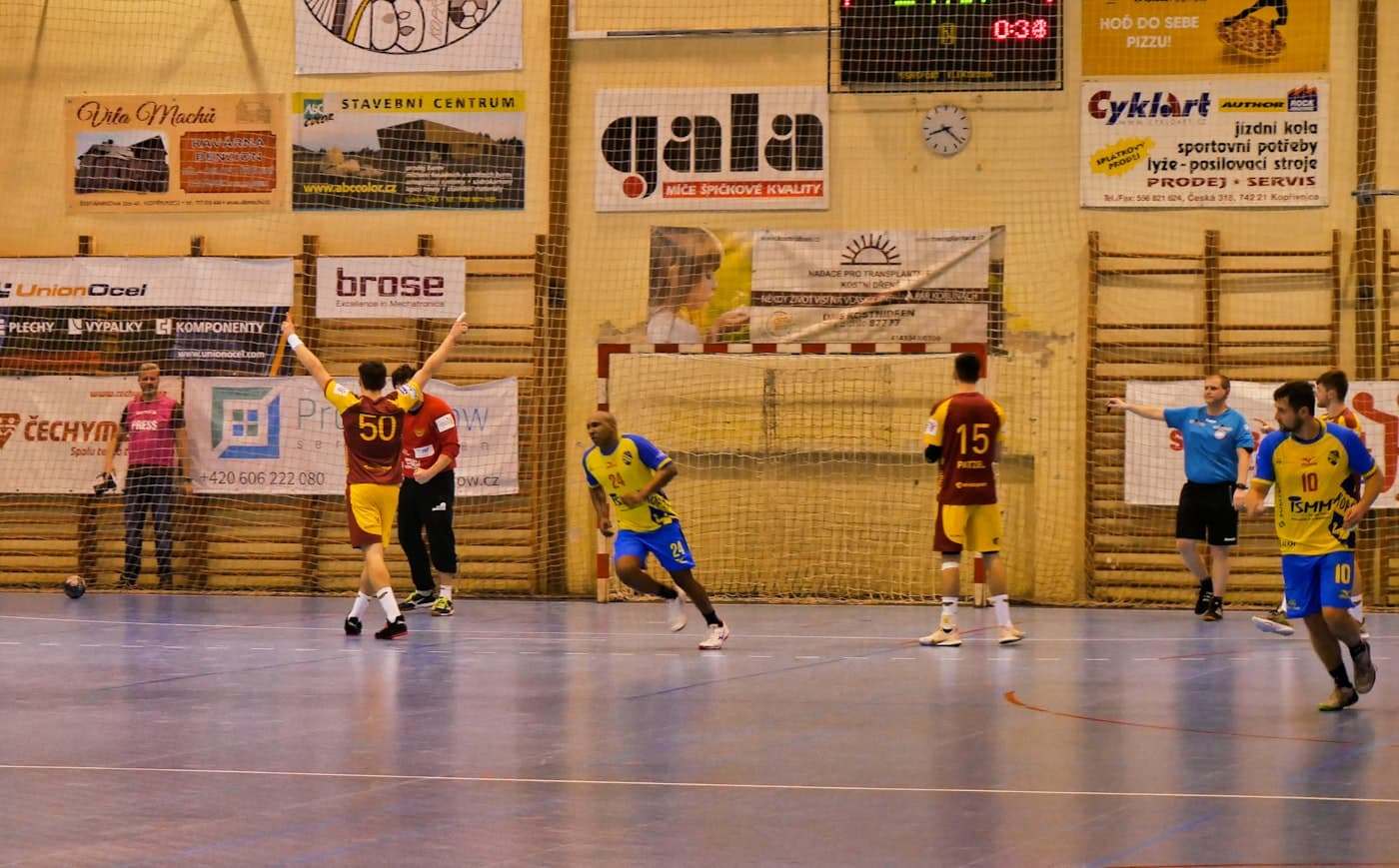

Six weeks. That is how long it took a Norwegian study to show that a simple weight on the forearm, without setting foot in the weight room, measurably increases throwing speed in female handball players. It is one of those pieces of research that should change the planning of any back-court coach starting tomorrow.
The study that puts the focus on the arm, not the gym
Roland van den Tillaar, a leading researcher in handball throwing biomechanics, published in January 2025 in the Journal of Functional Morphology and Kinesiology a study with twenty-five experienced players (average age 24.7, 14 years of competitive experience). Fourteen trained with wearable resistance attached to the forearm during their regular handball sessions; eleven formed the control group doing the same work without added weight.
The result, after six weeks: throwing speed increased in a statistically significant way in the experimental group (p = 0.006) and did not in the control group. What's interesting is not only that it works, but why. The kinematic analysis detected specific changes in the movement: greater shoulder and wrist flexion at the moment of ball release, and a higher elbow extension velocity. In other words, the weight did not build raw strength —the maximal strength test showed no significant differences (p > 0.075)— but changed the way the technical movement is executed. The body adapts to peripheral overload by adjusting the joint sequence, and that adaptation translates into more ball exit speed.
For any coach who has spent years trying to improve throwing power through bench press and military press, this is a wake-up call. There is no need to load the bar: it is enough to train the specific movement under added resistance and let the neuromuscular system solve the problem in its own way.
What wearable resistance exactly is and why it is not a passing fad
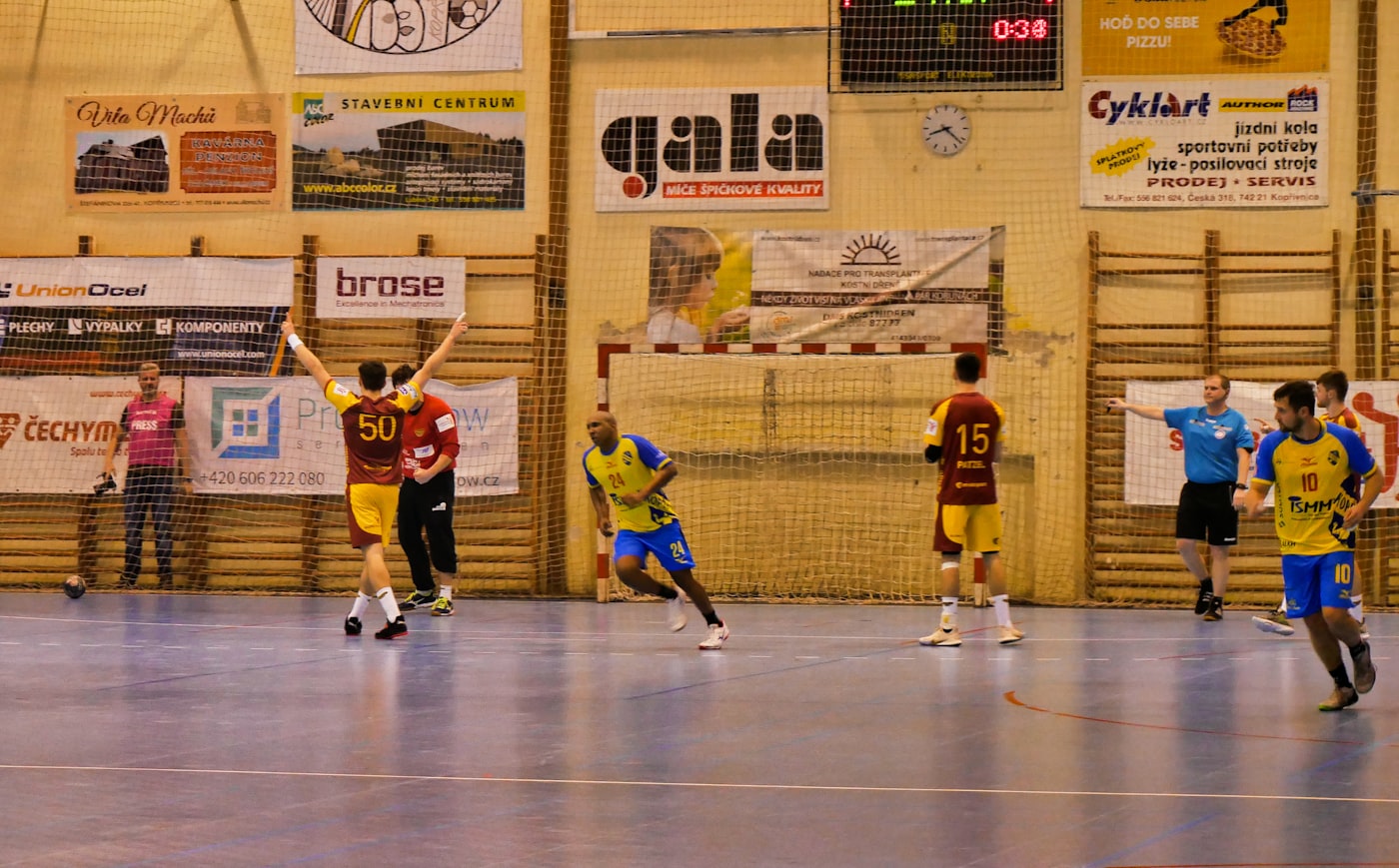
Wearable resistance (wearable resistance) consists of small loads, normally 100 to 300 grams per unit, attached with Velcro to the forearm, arm or wrist during the sporting movement itself. The key difference from traditional strength training is that it doesn't break specificity: the player keeps throwing exactly as in a match, just with an extra load that forces the neuromuscular system to recruit more motor units in the same movement pattern.
This technique has been used for more than a decade in athletics and in throwing sports such as baseball, but its systematic application to handball is recent. Van den Tillaar's study is among the first to provide quantitative data specific to this discipline, and it arrives at a time when Bundesliga and Liga Asobal clubs are already experimenting with similar devices in pre-season.
What the rest of the scientific evidence says
This finding doesn't arrive in isolation. A systematic review also published in 2025 (Pulgar and Heres) on elastic-band strength training in young handball players, aged thirteen to twenty-six, found significant improvements in explosive strength, power and throwing speed, as well as benefits in jumping and changes of direction. It is the same logic: moderate loads, applied specifically to the movement or to movement patterns close to it, generate adaptations that generic gym strength work doesn't always replicate on court.
There is also established evidence on the effect of concurrent strength periodisation alongside technical-tactical work over a full season. Spanish research on competitive teams shows that combining different strength-training methods with regular team sessions measurably improves upper- and lower-body power, throwing speed and vertical jump height. The underlying message, repeated in several independent studies, is the same: strength training in handball works best when it lives alongside the ball, not when it is isolated in the gym as a separate block.
"The weight did not build raw strength. It changed the way the movement is executed. The body adapts to peripheral overload by adjusting the joint sequence, and that adaptation translates into more ball exit speed."
The critical side: what this type of training doesn't solve
It shouldn't be sold as a panacea. Van den Tillaar's own study points out that there were no significant changes in maximal angular velocities or in the timing of the different joint angles, only at specific points of the movement near ball release. This suggests that wearable resistance optimises a specific part of the throw, not transforms it entirely. There is also, as yet, no data on the medium- or long-term effect, nor on the risk of overload in the shoulder and elbow joints if applied without criteria or for too many weeks in a row. Van den Tillaar worked with adult, experienced players: extrapolating these results to youth categories without specific supervision would be, to say the least, rash.
Besides, twenty-five subjects is a small sample. It is a solid study in its design (control group, before-and-after measurements, detailed kinematic analysis), but a single piece of work with this N should not become training dogma. The prudent course is to treat it for what it is: a promising piece of evidence that opens a line of work, not a settled truth.
What the evidence still doesn't fully resolve
Not all recent research on throwing speed points in the same direction with the same clarity. A study with twenty-two university handball players compared two velocity-based training (VBT) protocols with individualised load profiles: one group trained at low movement velocity (between 0.75 and 0.96 m/s, around 60% of 1RM) and the other at high velocity (between 1.03 and 1.20 m/s, around 40% of 1RM). The result was less conclusive: the group-by-time interaction was not statistically significant for maximal bench press strength, maximal throwing velocity or skeletal muscle mass.
Put in context alongside the wearable resistance study, the message for any strength coach is clear: not all indirect strength-training methods produce the same effect on throwing speed, and fashionable technology (velocity sensors, individualised load profiles) doesn't by itself guarantee improvement if it isn't accompanied by the specificity of the real throwing movement. Wearable resistance works, according to the available data, precisely because it doesn't separate strength work from the technical movement. Traditional strength training with transfer to throwing remains harder to guarantee than is sometimes sold at courses and seminars.
How to apply it on the court, with common sense
For a Liga Asobal or División de Honor Plata club with access to a physiotherapist and a strength coach, incorporating occasional throwing sessions with wearable resistance on the forearm, two or three times a week during blocks of four to six weeks, is a low-cost, low-risk intervention if dosed well. For a grassroots club without that technical backing, the recommendation is more conservative: start with minimal loads, prioritise movement quality over volume, and keep in mind that throwing technique in youth categories is still being built, not just optimised.
What does seem clear, with the evidence accumulated in 2025, is that throwing speed in handball is no longer trained only on the weight bench. It is trained, more and more, in the movement itself, with small loads that force the body to find more efficient solutions. It is a simple idea, cheap to apply, and now backed by concrete data. It is worth trying this pre-season.
