In the summer of 2019 I had the chance to spend a week visiting several youth development clubs in Denmark, specifically in the Midtjylland region. It was one of the most revealing and, I must be honest, most uncomfortable experiences of my career as a coach. Revealing because I saw things I had never seen in Spain at those age levels. Uncomfortable because I went home certain that what we were doing -- what I was doing -- had structural problems I did not quite know how to solve.
I have been working for more than fifteen years in youth and high-performance handball in the Basque Country. I have coached teams from under-14 up to the regional under-16 boys' selection. I have been a coach in Primera División Nacional and in Plata with Trapagaran Eskubaloia. My perspective on the Spanish development system is not that of someone observing it from outside: it is that of someone who has worked inside it, who has fought with its limitations and who has tried to build something valuable despite them.
What I am going to write here does not claim to be an exhaustive academic analysis. It is my honest reading, formed over years of direct work with young players, of what we do well and of what we are systematically doing worse than the Danes. And of why that difference matters.
The first thing I saw in Denmark and never forgot
I arrived at the first session expecting to see something technically sophisticated, complex drills, intense physical work. What I saw was the opposite: an under-13 session where for the first half hour the players simply played. Only played. Small-sided handball, three-on-three, four-on-four games, with rule modifications the coach introduced occasionally when he saw that some concept needed reinforcing. No constantly stopping the drill. No lines of players waiting for their turn. No coach shouting technical instructions while the player tried to execute.
I stayed watching the coach, a man of about forty with a calm that I found almost disconcerting. I asked him what he was developing in that drill. He answered, in functional English: "Today we work on decision-making in numerical superiority. But I don't tell them when they have the superiority. They have to see it themselves." That was all.
That conversation stayed with me for weeks. In Spain, in equivalent categories, I would have stopped the drill four or five times to explain when there was numerical superiority, where the player had to be, which decision was the right one. I would have robbed the player of the decision to make it myself. And the player would have reached the match without having learned to see it on his own.
The Danish model: philosophy before method
The Danish development model, in its most refined version, is based on a philosophical principle that seems obvious when stated but has radical consequences in practice: the goal of youth training is not to teach handball. It is to create players who learn handball.
The distinction is subtle but fundamental. If your goal is to teach handball, you optimise training to transmit information: you tell them what to do, you correct them when they get it wrong, you give them the right model to reproduce. If your goal is to create players who learn, you optimise training to generate situations where the player has to solve problems: you put him in contexts where he has to make decisions, you let him make mistakes, and you only step in to give additional tools of analysis, not to give the answer.
In Danish practice, this translates into a ratio between play and analytical drills that inverts what we normally see in Spain. In Denmark, up to 14 or 15 years old, training consists mainly of small-sided game situations with modifications. Isolated technique drills -- a wing doing feints in front of a cone, a pivot practising catches with a ball thrown from a fixed stand -- are occasional tools used to reinforce something very specific, not the core of the session. If you want to go deeper into how these methodological differences are reflected in the type of player each system produces, the ASOBAL market value ranking clearly shows which player profiles -- the most versatile, those with the greatest tactical intelligence -- generate the greatest competitive value.
What we do differently in Spain, and why
The Spanish development model -- and I speak with knowledge of the Basque Country, which is not the worst example in the country -- has a structural tendency towards early specialisation. At ages when players should still be developing their general motor repertoire and their ability to make decisions in open situations, we are already putting them in fixed positions, teaching them specific defensive systems and demanding a technical execution that in some cases requires a level of motor maturity they do not yet have.
Why do we do this? The honest answer has several layers. The first is cultural: in Spain, short-term results weigh heavily in how a youth coach's work is judged. A winning under-14 team means a coach who "works". An under-14 team that loses but is developing its players well means a coach "who isn't good enough". That pressure leads many coaches to optimise for the immediate result -- which in youth categories favours early specialisation and rigid systems -- rather than for long-term development.
The second layer is coach education. In Denmark, youth coaches have access to a professional development system far superior to ours. Regional federations in Spain do what they can with the resources they have, but the gap between what a youth coach learns in Denmark and what one learns in Spain is still considerable. Not in handball knowledge -- Spanish coaches know a lot about handball -- but in learning methodology, in developmental psychology, in how to design a session that maximises the transfer of learning to the real game.
The third layer -- and this is the one I find most uncomfortable to admit -- is ego. Many youth coaches, myself included in my early years, tend to run sessions to show how much we know about handball, not so that the players learn. Complicated drills, sophisticated systems, advanced technical terminology. All very impressive for the parents on the sideline and for the club coordinator. But not necessarily what a 12-year-old needs to develop his potential.
The problem of the federation calendar: tournaments that distort development
There is an element of the Spanish system that I consider especially problematic and that is rarely discussed frankly: the competitive calendar of the youth categories.
In Denmark, up to 14-15 years old, competition is deliberately low in intensity and high in volume. Many matches, little pressure over results, competition structures that allow all players to rotate and do not emphasise the final result. The Danish federation has designed the youth calendar to serve development, not to serve spectacle or the league table.
In Spain, the federation calendar for the under-14 and under-16 categories in many autonomous communities replicates, on a smaller scale, the adult competition model. League tables, play-offs, promotions and relegations. Decisive matches at ages when the players' nervous systems are not ready to handle that pressure without consequences for their development. And coaches who, knowing there is an important match at the weekend, change their training plan to prepare for that match instead of continuing with the planned development.
I have fallen into that trap many times. The week before a key match against the second-placed team, the technical-tactical work I had planned turns into specific preparation for the opponent. It is understandable. It is human. But it contradicts the principles of long-term player development.
What we do well: no self-deception, but no complexes either
It would be unfair and inaccurate to end this reflection without acknowledging what the Spanish system does well. And there are important things.
First: the individual technical quality of the players coming out of the Spanish system is high. The ball skills, shooting technique and general motor coordination of Spanish youth players are competitive at European level. When our players reach the national under-20 or under-21 team, technically they are at a level to compete with the best.
Second: the competitive culture. Spanish players know how to compete. They know how to play difficult matches and handle the pressure of competition. That is a quality with real value, and one that the Danish model, with its emphasis on process over result, sometimes does not develop with the same intensity.
Third: the diversity of talent. Spain is a big country with a broad base of players and distinct regional traditions. Basque, Catalan, Andalusian and Madrid handball each have their own characteristics, which have given the national team players of very different profiles. That diversity is a richness that more homogenised models do not always generate.
Three changes you can apply tomorrow with no extra resources
I will finish with something practical, because I think reflecting on the model is useless if it does not lead to changes in the coach's daily work.
The most impactful change a youth coach can make tomorrow, with no extra resources or training time, is to reduce interruptions during training. Let the drill flow more. Let the player make the mistake, process the mistake, attempt the correction. Only interrupt when the mistake is becoming a habit, not when it happens for the first time. That single modification changes the nature of learning in training in a radical way.
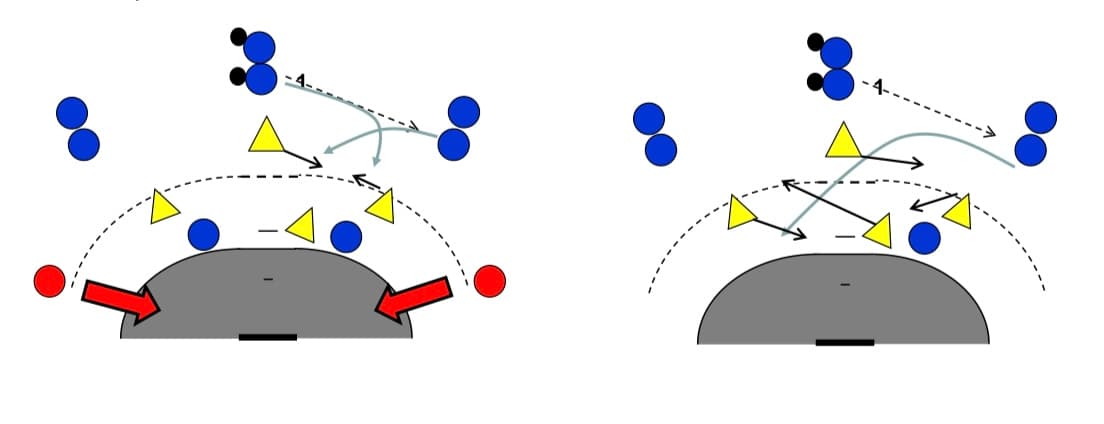
The second change, equally accessible: increase the volume of small-sided play with modifications. Three-on-three, four-on-four, with specific rules that force the situation you want to develop. If I want to work on numerical superiority in attack, instead of an analytical three-pass drill with cones, I design a three-on-two where the attacking team wins an extra point if it identifies and exploits the superiority in fewer than four passes. The real game context facilitates the transfer of learning in a way isolated analytical drills never achieve.
The third change is the hardest because it requires something no training plan can guarantee: giving up optimising for this weekend's result when that result goes against the player's long-term development. It is easy to say. It is very hard to do when you have lost three in a row and the club coordinator starts asking questions.
Denmark is twenty years ahead of us in model. We cannot recover those twenty years at once. But we can start working differently, one session at a time. And the players in front of us -- who have talent, who are eager, who deserve the best we can give them -- deserve it.
