Cologne once again did what Cologne does better than anyone: turn handball into a high-voltage show. Two semi-finals. A dethroned champion. Extra time to take the measure of Barça. A Füchse Berlin that played with the hunger of those who had been waiting a year for revenge. And a final with far more bite than it seems.
The Final Four of the men's Champions League produced two very different matches, but one conclusion: at the Lanxess Arena it is not enough to play well for many minutes. You have to know how to close. You have to know how to suffer. You have to have goalkeeping when the arm starts to feel heavy. You have to understand that, in Cologne, details stop being small.
The Füchse Berlin toppled the reigning champion, SC Magdeburg, by 40-35 in a high-tempo German semi-final of 75 goals. Then Barça beat Aalborg by 37-32 in a semi-final that needed extra time after a 28-28 draw at the end of regulation. On Sunday there will be a final between Barça and Füchse. Experience against hunger. Craft against cheek. History against a team that no longer wants to be a contender.
Füchse Berlin 40-35 SC Magdeburg: the revenge played at full speed
The first semi-final had memory. Magdeburg and Füchse Berlin did not arrive in Cologne as two strangers crossing at the right moment. There was a score to settle. Last year, Magdeburg had won the European final against Füchse themselves. This time, Berlin arrived with a different face. More mature. More aggressive. More convinced they could take more than a match from the champion.
And they did it through tempo.
The match started as if nobody had any intention of calculating. Füchse ran, Magdeburg accepted the exchange and the semi-final soon entered almost wild territory. There was none of the initial feeling-out period that sometimes appears in a Final Four. There were blows, shots, transitions and a clear sensation: Berlin wanted to open the game and force the champion to defend many metres backwards.
The final result, 40-35 to Füchse Berlin, explains the offensive volume, but not entirely the substance. Berlin won this semi-final because it was able to sustain its approach even when Magdeburg threatened to do what champions do: survive first and punish afterwards. Bennet Wiegert's side even overturned a large deficit and got fully into the match, but the final quarter left it without oxygen. Magdeburg suffered a drought of almost ten minutes without scoring, and that is where the semi-final broke.
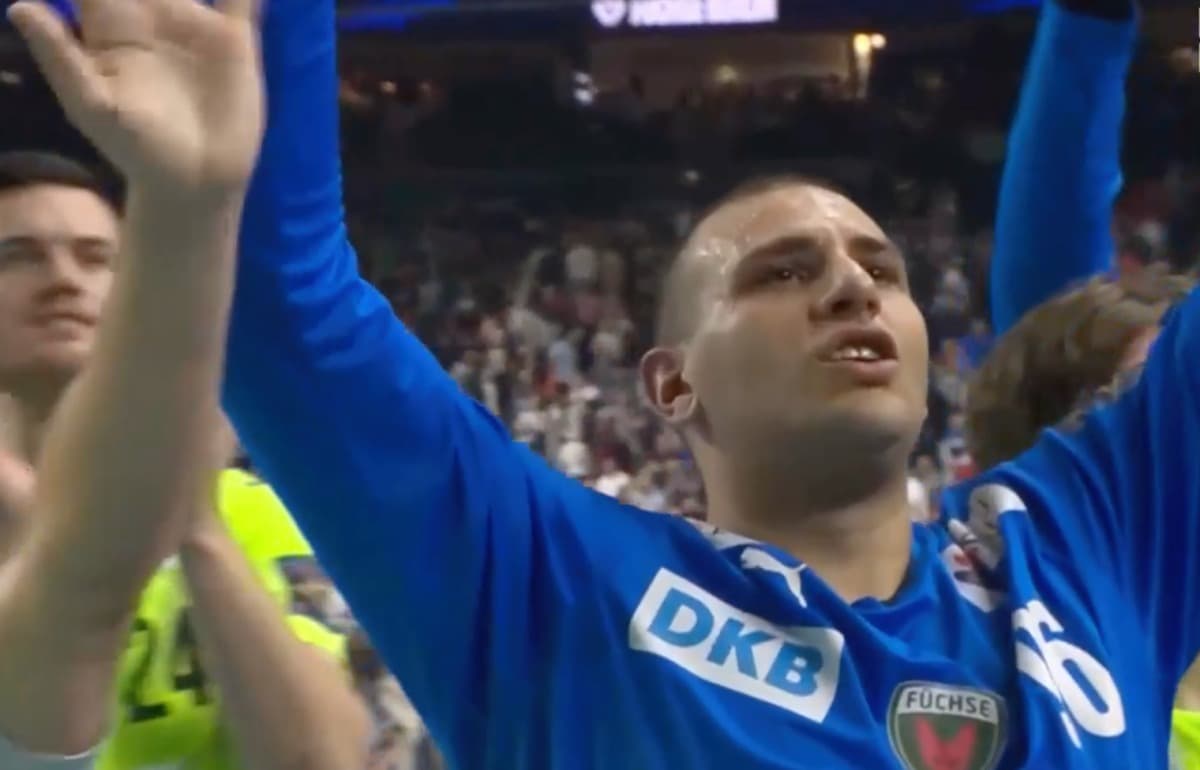
In that stretch Dejan Milosavljevappeared. Until then, the match had been more about attacks than goalkeepers. But in a Final Four you don't always need to win 60 minutes from the goal. Sometimes it is enough to win the ten that decide the place in the final. Milosavljev did it. He became huge when Magdeburg needed a goal to take charge again, closed angles, intimidated and gave Berlin exactly what it needed: time to run and distance to believe.
It was also an afternoon of individual attacking names. Mathias Gidsel showed again why he is one of those players who change the geometry of a defence every time he receives. It is not just what he scores. It is what he forces you to correct. It is the threat of his first burst, the fear of contact, the read to release the ball when help arrives. Beside him, Lasse Andersson gave Berlin outside shooting, personality and that feel of a player who knows perfectly when the match calls for a strong decision.
Magdeburg fell with pride, but it fell. And that is already news. The reigning champion was unable to stop the bleeding once Berlin found continuity. In a 75-goal match, the problem is not usually conceding a lot. The problem is stopping scoring when you need it most.
Füchse Berlin didn't just win. It shed a burden. And that, before a Champions League final, can weigh a lot.
Barça 37-32 Aalborg: surviving is also a form of greatness
The second semi-final was another kind of fight. Less unleashed at the start. More tactical. More controlled by Barça for much of the match. And, perhaps for that reason, more dangerous when Aalborg began to grow.
Carlos Ortega's side built its lead from the back. Serious defence, intensity in contact and Emil Nielsen holding the team up when Aalborg found clear positions. Barça went into the break with a four-goal lead, which reflected a very solid first half. It wasn't a thrashing. It was something more recognisable in European Barça: control, craft and the feeling of having the semi-final where it wanted it.
For many minutes, the match seemed to be heading that way. Barça managed its leads, found goals at important moments and gave the impression that Aalborg had to do too many things right to come back. But the Danish side never went away. And that is also part of the character of these semi-finals. In Cologne nobody hands over a final because the opponent looks more finished.
Aalborg kept adjusting. It defended better, ran when it could and began to find confidence. Barça, which had held the match in a zone of some comfort, slid into an uncomfortable finish. The lead shrank. The match tensed up. And the 28-28 draw took the semi-final to extra time.
That moment was extremely dangerous for Barça. Not so much because of the score, but because of the feeling. When a team that has been ahead for so many minutes sees the opponent drag it into extra time, the danger is not only physical. It is mental. Doubt appears. The memory of missed chances appears. That question appears that nobody voices, but everybody feels: is it slipping away from us?
Barça responded as teams that have spent years living these nights respond. It didn't get nervous. It didn't get carried away by Aalborg's emotional momentum. It punished the empty goal, found simple goals at the most important moment and again leaned on Nielsen to shut the door when the match demanded one more intervention.
The gamble of the seven-on-six had given Aalborg life, but in extra time it became a risk zone. Barça read well when to run, when to shoot and when to punish. Within a few minutes, what looked like an open semi-final was back under Blaugrana control. The final 37-32 can deceive anyone who didn't watch the match. It was not a comfortable win. It was a win of survival.
And surviving, in a Champions League semi-final, is also a form of greatness.
Barça arrives with craft; Berlin, with hunger
Sunday's final offers a very attractive contrast. Barça arrives from experience, from competitive memory, from that capacity not to break even when the match pushes it to the edge. Füchse Berlin arrives from energy, from revenge and from the emotional blow of having knocked out the champion.
Barça knows how to play finals. It knows how to lower the pulse when the opponent wants to raise it. It knows how to find goalkeeping, defence and craft goals. But it will face a team that, if it manages to turn the final into a race, can do enormous damage.
Berlin has Gidsel, who forces you to defend with constant help. It has outside shooting. It has goalkeeping if Milosavljev keeps the emotional level of the semi-final. And it has something that can't be trained: the feeling of facing an opportunity that cannot be allowed to slip.
Barça, for its part, needs to control the tempo. If the final goes to a very high score, Berlin will feel comfortable. If Barça manages to make it longer, more positional, heavier, it will have a lot of the way won. That is where Nielsen, the defence, the handling of numerical inferiority, the calm of the veterans and Carlos Ortega's ability to stop Füchse living in transition for too long come in.
It doesn't look like a final written in advance. And that is the best thing that can happen to Cologne.
Analyst · Liftados
The one who plays best doesn't win. The one who holds up best when the match breaks does.
What these semi-finals leave is one very clear thing: in Cologne the one who plays best for the most minutes doesn't always win, but the one who holds up best when the match breaks.
Füchse Berlin had a brutal touch of cheek. They didn't get scared when Magdeburg turned the match around and that, against the champion, says a lot. Gidsel again looked like a player able to change the tempo of a semi-final every time he touches the ball, but for me the key was Milosavljev. He didn't need to stop the whole match. It was enough to show up at exactly the right moment. And in a Final Four that is worth a final.
Barça, on the other hand, won from somewhere else. It won from experience. For many minutes it seemed to have the match under control, but Aalborg got it into a huge mess. And there Barça did what teams that have spent years living these nights do: it didn't get nervous when the match went to extra time. It punished the seven-on-six, found goalkeeping, ran when it was time and understood that the semi-final was no longer about playing pretty, but about surviving.
The final looks beautiful to me because it pits two very different states of mind against each other. Berlin arrives with hunger, with energy and with the feeling of having toppled the champion without asking permission. Barça arrives with craft, with competitive memory and with that very characteristic ability to find a solution even when the match has got too complicated.
If Füchse manage to run and take the score to an offensive absurdity, they will have many chances. If Barça slows the match down, defends long and forces Berlin to play more uncomfortably, the final can fall on the Blaugrana side.
But that's the beauty of it: it doesn't look like a final written in advance. And in Cologne, when nobody has the script secured, something big usually happens.
