

In youth football it no longer turns heads. The 15-year-old who in July looks for a centre to put hours into his strength, a coach to correct his stride, a gym so as not to lose the summer. It is the norm. Football has that mystique of professional life just around the corner, and that mystique moves parents, players and above all wallets.
Handball has none of that. There is no Champions League waiting with seven-figure salaries. And yet, this summer there is something different in the sports halls: more and more cadets and juniors are deciding that the off season is not for switching off.
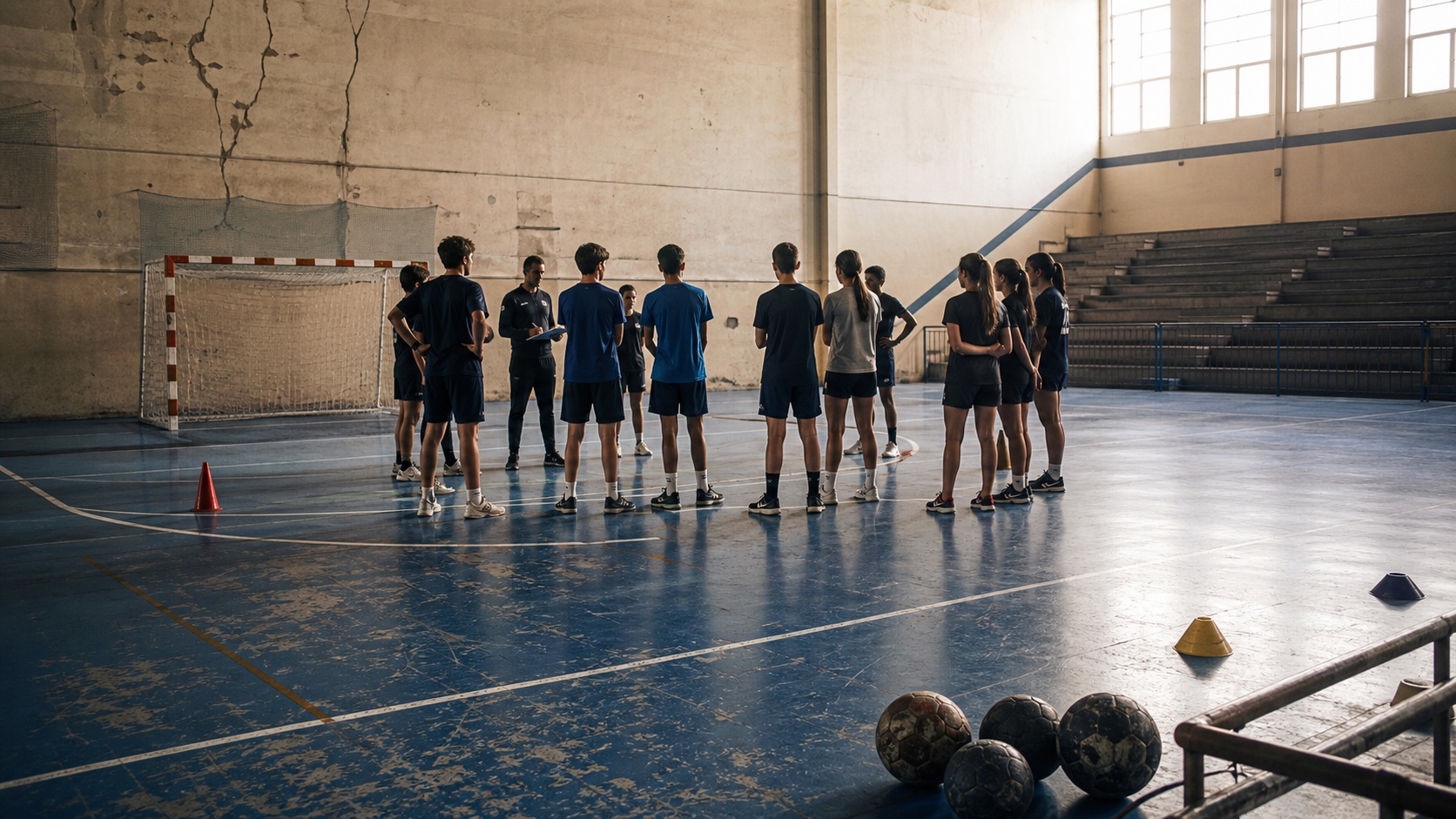
I heard this from Julen Iturrizaga, strength and conditioning coach of the Euskadi national team, at a training camp ahead of the CESA 2027. This summer he has 8 handball players, boys and girls, of cadet and junior age in his centre. Three years ago he had one, or none. It is not an isolated case or the fad of one particular club. It is starting to have volume.
What is striking is that nobody is promising them anything in return. In handball, apart from the odd exception in Asobal and almost none in the women's league, there is no salary that changes anyone's life. What these kids are chasing is something else, much more boring and much more effective: not arriving late to their club's pre-season.
And there lies the detail that really matters. Pre-season is not just physical volume, it is the start of a process that encompasses the physical, the technical-tactical and even the psychological, and that conditions the rest of the year. A player who arrives in August with the strength base already worked on does not start his team's pre-season, he continues it. That advantage used to be seen only at junior or senior level. Now it is moving down to cadet.
Studies on physical fitness in youth categories have long pointed to something that in football has been obvious for ten years: in youth handball the relationship between physical condition and competitive performance has barely been measured, because youth handball has come late to this. What is happening this summer is, at heart, catching up.
What a typical off-season session looks like for a cadet or junior
To get an idea of what this work really consists of, a typical session usually moves through these blocks:
- Activation and mobility (10-15 min): joint work for the shoulder and knee, the two areas where handball causes the most injuries because of the throwing motion and the changes of direction.
- Strength (30-40 min): squat, deadlift, push and pull with progressive loads. In cadet and junior the aim is not to lift a lot of weight, it is to build a general strength base before the club's pre-season arrives.
- Speed and changes of direction (15-20 min): short sprints, starts, braking and turns. Handball is decided over short distances, not in continuous endurance.
- Specific prevention work (10 min): eccentric exercises for the shoulder (external rotators) and knee (hamstrings, core), the part a fifteen-year-old most skips on his own and the one that prevents the most injuries in the medium term.
- Plyometrics or light technical work (10-15 min): jumps, footwork, a bit of throwing without the intensity of the season, so as not to lose the sport's motor pattern.
None of this is sophisticated or requires the facilities of a professional club. It is consistency: two or three sessions a week from July to August, well planned, with load progression and no improvising. The difference is not in the brilliance of the exercise, it is in someone having planned it sensibly and the kid having stuck to it without skipping weeks.
What they really sell: being better than last year
If football sells the fantasy of becoming a professional, handball sells something smaller and healthier: being better than last year. There is no agent waiting at the exit of the sports hall. There is the awareness that in a sport with such fine margins, where one goal decides titles and relegations, whoever arrives in better shape in September plays with an advantage.
That a coach at a regional training camp detects this with data from his own centre says something about the whole ecosystem: regional teams, performance centres, club academies. They are starting to speak the language that youth football has been speaking for a decade.
It remains to be seen whether this lasts or fades within a couple of summers. Eight players in one centre is not a sample from which to draw definitive conclusions. But the direction of the data, from 0-1 to 8 in three years, does not seem like chance.
